
News
How Can Ad Budget Forecasting Prevent Growth Targets From Becoming Expensive Guesses?
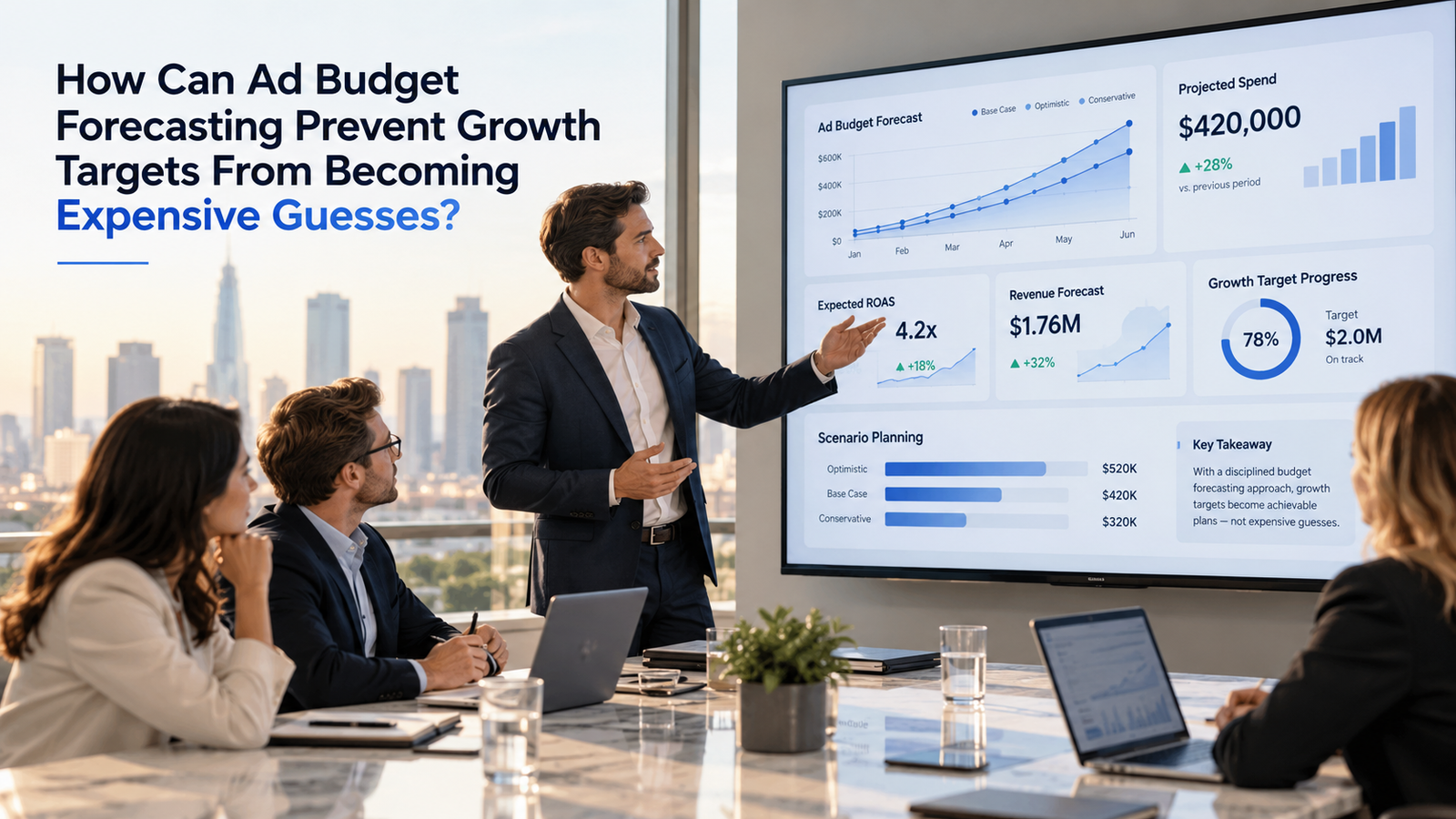
Increasing an advertising budget can support business growth, but spending more does not automatically produce more customers. A campaign that performs efficiently at a small budget may become less profitable when spending increases because it begins reaching less responsive audiences, creative performance declines, or the sales process cannot handle additional demand.
Ad budget forecasting helps businesses estimate how much they can reasonably invest while protecting profitability. It connects advertising decisions with conversion rates, customer acquisition costs, revenue targets, profit margins, and operational capacity.
Instead of selecting a budget based on instinct, businesses can use available data to create realistic spending expectations.
What Is Ad Budget Forecasting?
Ad budget forecasting is the process of estimating how much advertising investment may be required to achieve a particular business result.
The result could be a specific number of purchases, qualified leads, booked calls, subscriptions, or new customers. A useful forecast works backwards from that desired outcome.
For example, if a business wants 50 new customers, it needs to understand:
· How many leads are normally required to generate one customer
· How much it usually costs to acquire a qualified lead
· The percentage of leads that become customers
· The average revenue and profit generated by each customer
· How campaign performance may change at a higher budget
A forecast is not a guarantee. It is a planning model that helps businesses make more informed decisions and recognise potential risks before increasing spending.
Why Is Choosing an Ad Budget Without Data Risky?
Many businesses choose their budget using one of two methods: they spend what feels affordable or copy the spending level of a competitor.
Neither method considers the company’s actual economics.
Two businesses offering similar services may have different conversion rates, profit margins, sales cycles, repeat purchase rates, and operational costs. A budget that is profitable for one company may create serious losses for another.
A knowledgeable performance marketing strategist looks beyond platform metrics and considers how advertising affects the complete business. The goal is not simply to spend the available budget. It is to invest at a level that supports sustainable customer acquisition.
Which Numbers Are Needed for an Accurate Forecast?
A useful forecast requires reliable information from advertising, website analytics, sales activity, and financial records.
Average Customer Value
Businesses need to know how much revenue an average customer generates. For repeat-purchase or subscription businesses, expected customer lifetime value may also be relevant.
Revenue should not be confused with profit. Product costs, service delivery, payment fees, refunds, and operational expenses must still be considered.
Customer Acquisition Cost
Customer acquisition cost shows how much the business spends to gain one paying customer. It should include the relevant advertising and marketing expenses rather than only the cost of a website conversion.
Lead-to-Customer Rate
A business may generate 100 leads but convert only ten into customers. In this case, the lead-to-customer conversion rate is 10%.
This rate helps determine how many leads are required to reach the customer target.
Website Conversion Rate
The website conversion rate shows how many visitors complete the desired action. If this percentage is weak, buying more traffic may increase spending faster than results.
Effective conversion rate optimization can improve the value of existing traffic before a business commits to a larger media budget.
Average Cost Per Click
The expected cost per click helps estimate how much traffic a proposed budget may generate. However, costs can change due to competition, audience size, seasonality, placement, and campaign quality.
How Can a Business Work Backwards From a Revenue Goal?
Suppose a company wants to acquire 40 new customers.
If 20% of qualified leads become customers, the company needs approximately 200 qualified leads. If each qualified lead costs an average of $30, the estimated media requirement is $6,000.
The basic calculation is:
Customer target ÷ lead-to-customer rate = required leads
Required leads × cost per qualified lead = estimated advertising budget
This provides a starting point, but the company should also include a reasonable testing allowance and account for performance changes as spending increases.
Previous campaign results can make the assumptions more reliable. If historical data is unavailable, the initial forecast should be treated as a test rather than a fixed promise.
Why Does Performance Change When the Budget Increases?
Advertising platforms usually capture the easiest available opportunities first. When spending grows, campaigns may need to reach people who are less likely to convert.
Several factors can affect performance during scaling:
· The target audience becomes saturated
· Advertisement frequency increases
· Creative fatigue reduces response
· The platform explores less proven segments
· Website traffic quality changes
· Sales teams take longer to contact leads
· Inventory or service capacity becomes limited
This is why campaign scaling is rarely perfectly linear. Doubling the budget does not guarantee twice as many customers at the same acquisition cost.
A careful scaling plan increases investment gradually, monitors business outcomes, and identifies the point at which additional spending becomes less efficient.
How Should Testing Be Included in the Budget?
A business should not commit its entire budget to existing advertisements. Some investment should be reserved for testing new messages, audiences, offers, formats, and landing pages.
Without testing, performance can decline when the current creative loses effectiveness.
A practical budget may be divided into three areas:
· Proven campaigns producing dependable results
· Controlled scaling of successful campaigns
· Testing of new opportunities and creative ideas
The exact allocation depends on the business’s maturity and risk tolerance. A new account may require more testing, while an established account can place more budget behind proven campaigns.
A strong creative testing process ensures that test spending answers specific questions instead of funding random variations.
How Can Creative Performance Affect a Budget Forecast?
Creative quality directly influences how efficiently a campaign converts attention into action.
A forecast built around one successful advertisement is fragile. The ad may eventually experience fatigue, attract a less responsive audience, or lose relevance as market conditions change.
Businesses need a pipeline of creative concepts that address different problems, objections, benefits, and awareness stages.
Working with an experienced creative strategist can help connect creative development with campaign evidence. Each new concept should have a clear reason for being tested and a measurable role within the wider strategy.
Why Must Sales Capacity Be Included?
Advertising can generate more enquiries than a team is prepared to manage.
If response times become slower, appointment availability becomes limited, or sales representatives cannot follow up properly, conversion rates may decline. The advertising platform may appear responsible even though the real constraint exists after the lead is generated.
Before increasing the budget, businesses should evaluate:
· How many leads the team can manage
· How quickly enquiries receive a response
· Whether appointments are available
· Whether inventory can meet demand
· Whether customer service can maintain quality
Relevant case studies can help businesses understand how advertising, creative execution, and operational readiness work together during growth.
How Often Should a Budget Forecast Be Updated?
A forecast should be reviewed whenever its main assumptions change.
These changes may include new advertising costs, different conversion rates, seasonal demand, revised pricing, lower profit margins, stronger sales performance, or new creative results.
Monthly reviews may be appropriate for stable campaigns, while actively scaling campaigns may require weekly monitoring.
The forecast should compare predicted results with actual results. Over time, this process improves planning accuracy and reveals which assumptions need adjustment.
Final Thoughts
Ad budget forecasting cannot remove every uncertainty from paid advertising, but it can prevent growth targets from becoming expensive guesses.
A reliable forecast begins with customer value, acquisition cost, conversion rates, sales capacity, and realistic scaling expectations. It also reserves enough budget for creative testing and accounts for the possibility that performance may change as spending increases.
Businesses should treat the forecast as a living model. When campaign data and business conditions change, the budget plan should change with them. This approach makes advertising decisions more controlled, measurable, and connected to profitable growth.
Frequently Asked Questions
1. Is ad budget forecasting completely accurate?
No forecast can guarantee exact results. Its purpose is to create a realistic range based on current data and clearly defined assumptions.
2. Can a new business forecast an advertising budget?
Yes, but a new business should begin with conservative assumptions and use an initial testing budget to collect reliable performance data.
3. Should revenue or profit determine the budget?
Profitability should guide the decision. Revenue alone does not account for delivery costs, product costs, refunds, fees, and other expenses.
4. Why can customer acquisition costs rise during scaling?
Larger campaigns may reach less responsive audiences, experience creative fatigue, or create operational pressure that lowers conversion rates.
5. When should a business reduce its advertising budget?
A reduction may be necessary when acquisition costs exceed sustainable limits, lead quality declines, sales capacity is restricted, or tracking becomes unreliable.
Ready to Implement This in Your Ad Account?
Stop guessing why your Meta ads are stalling. Let's look inside your Ads Manager together and find the high-leverage growth bottlenecks.
Book 15-Minute Strategy Call →