What Is UGC Creative Strategy, and How Do You Build One That Scales?
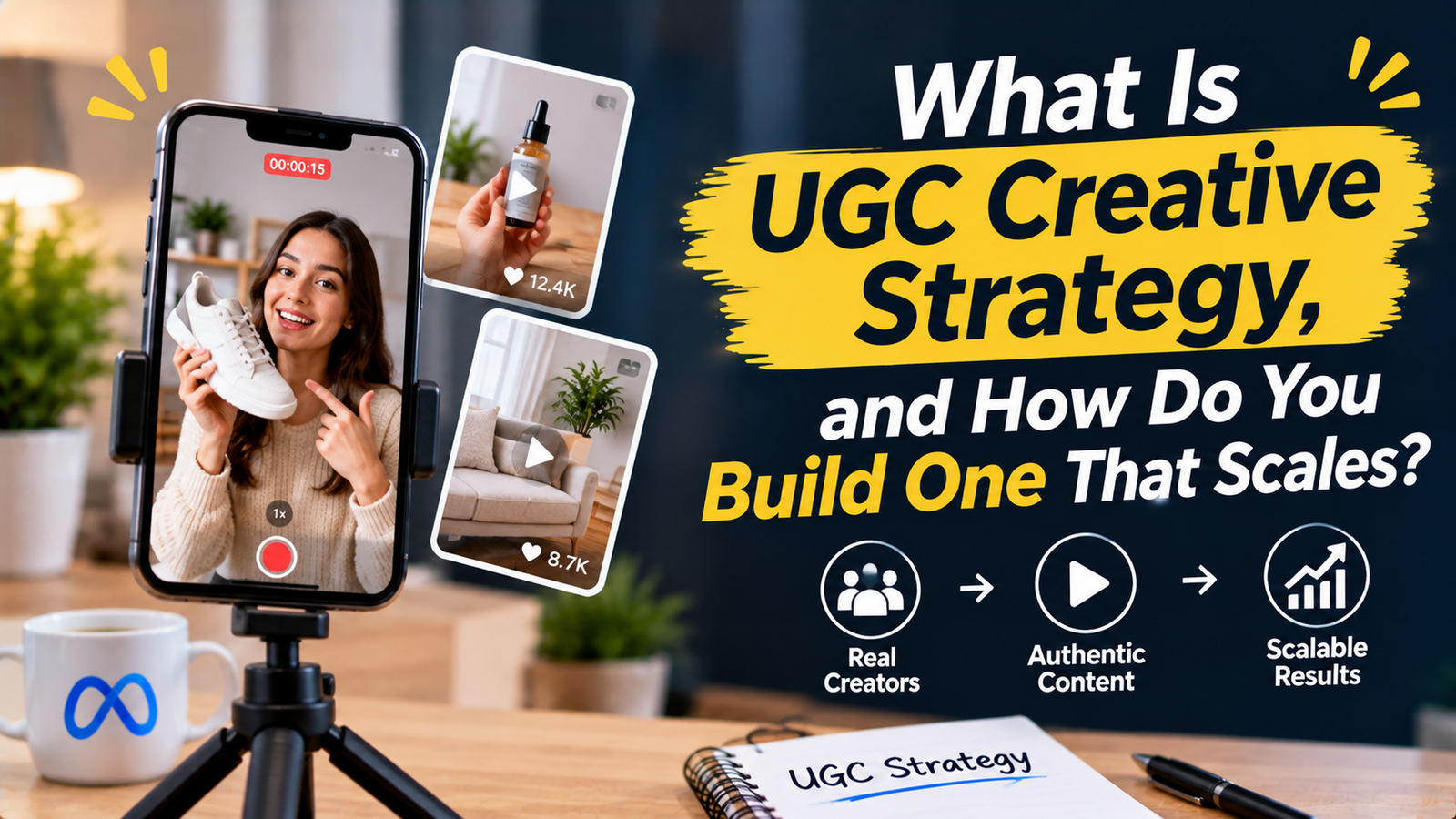
UGC creative strategy is the plan that decides which customer problems your user-generated style ads will speak to, which formats will carry the message and how you will learn what works. Without it, brands tend to commission a batch of videos, watch two or three get traction and then struggle to explain why. With it, every video has a purpose, and every result teaches you something you can use in the next batch.
This guide explains what a UGC strategy includes, how to build one from customer research, which formats and creators to mix, and how to test and refresh your ads as spend grows. The examples use a fictional ergonomic desk chair brand, so swap in your own product as you read.
What Does a UGC Creative Strategy Actually Include?
Many advertisers think of UGC as a style of video: handheld, casual, shot by a real person. That describes the production. A strategy sits above it and answers a more important set of questions about why each video exists and what it should teach you.
Strategy, Script and Production Are Different Layers
It helps to separate three layers. Strategy decides the audience, the angle and the goal. Scripting turns that angle into beats a creator can follow. Production is the filming and editing. Problems usually start when a team jumps straight to production and hopes the first two layers will sort themselves out. A beautiful video built on a weak angle still fails, and a rough video built on a strong angle often wins.
The Five Questions a Strategy Answers
- Who is this ad for, and how aware are they of the problem?
- What pain or desire will the ad speak to?
- Which format will carry the message best?
- Who will deliver it so it feels believable?
- How will we measure and learn from the result?
If you can answer these five for every video in your plan, you have a strategy. If not, you have a shot list.
How Do You Build the Foundation With Research and Angles?
Where Strong Angles Come From
The best angles come from the words customers already use. Read product reviews, support tickets, return reasons, social comments and sales call notes, and highlight repeated phrases. If several buyers say the chair "saved my back after long workdays," that phrase is a ready-made angle. You can also study competitor ads to see which messages dominate the market, then look for the gaps rather than copying what you see.
Turn Research Into an Angle Matrix
Once you have raw notes, group them into audiences, pains and formats. A desk chair brand might list three audiences (remote workers, gamers and students), three pains (back ache, poor posture and cheap chairs that wear out) and three formats (testimonial, demo and comparison). Combining them gives dozens of distinct concepts, far more than you need. Pick the combinations with the strongest evidence first and leave the rest as a backlog.
Which UGC Formats and Creator Types Should You Mix?
Common UGC Formats
Six formats cover most needs:
- Testimonial: a real customer describes their result.
- Unboxing: the first impression and what comes in the box.
- Demonstration: the product solving a problem on camera.
- Problem and solution story: a short narrative from frustration to relief.
- Comparison: the product next to the usual alternative.
- Founder-style explainer: a person explaining why the product exists.
Match Format to Funnel Stage
Cold audiences usually respond best to problem-led stories and demonstrations, because they need to recognize the problem and see the product working. Warm audiences, who already know the brand, tend to respond to testimonials, comparisons and answers to common objections. People close to buying often just need a clear offer and reassurance, such as a guarantee. Mapping formats to stages keeps you from showing the wrong message to the wrong person.
Brief Creators With Beats, Not Lines
Good UGC scriptwriting gives creators the key beats and the claims that must be said, then leaves the wording to them. Over-scripted videos sound like adverts, which defeats the purpose. A one-page brief with the angle, the audience, the must-include points and two or three example hooks is usually enough. Choose creators whose look and tone resemble the audience you want to reach, because believability matters more than polish.
How Do You Test and Learn Without Burning Budget?
Test Angles Before Polishing Execution
Creative testing should start with angles, because the reason someone buys has more impact than a better edit. Launch several different angles in similar formats, give each enough spend to show a signal and then decide which deserve more investment. Only after an angle proves itself should you test hooks, creators and formats within it. Doing it in this order saves money, because you don't polish ideas nobody wants.
Read Results at the Angle Level
A single video can win or lose by luck, so group results by angle and format. If three different videos built on the same angle all perform well, you have found something real. If one video wins and its siblings fail, the cause may be that creator, that hook or that edit. Keep a simple log with the angle, audience, format, creator, spend and cost per purchase so patterns stay visible.
How Do You Keep a UGC Strategy Fresh as It Scales?
Iterate on Winners Instead of Starting Over
When an angle works, make more versions: new hooks, new creators, new formats and new proof points. This extends the life of a good idea without repeating the same video. Watch for rising frequency and falling click-through rate, which usually mean the audience has seen the creative too often. Refresh before performance collapses, not after.
Connect Spend Decisions to Creative Decisions
As spend grows, someone has to translate delivery data into action. A performance media buyer handles budgets, campaign structure and bid decisions, and reads the signals that show which ads deserve more money. That information should flow back into the creative plan every week, so new briefs reflect what the account is actually rewarding.
Keep One Person Accountable for the Plan
A creative strategist typically owns the research, the angle matrix and the briefs, and turns each week's results into the next batch. When nobody owns that role, UGC programs drift into random one-off videos. Even in a small team, naming one person as the owner of the plan makes a visible difference.
Which UGC Strategy Mistakes Hold Brands Back?
Buying Volume Instead of Variety
Ordering twenty videos that all share one angle feels productive, but it tests very little. Ten videos built on five different angles teach you far more. Aim for variety in angles first and variety in execution second.
Overlooking Honesty and Disclosure
Creators should only make claims you can support, and paid content should follow the disclosure rules of the platforms and your region. Misleading claims or invented results can get ads rejected and damage trust. Give creators a short list of approved claims and ask for genuine experiences.
Frequently Asked Questions About UGC Creative Strategy
What is UGC creative strategy in simple terms?
It is a plan that decides who your UGC ads are for, what they say, which formats carry them and how you will learn from the results.
How many UGC videos do I need to start?
A handful of videos covering three to five distinct angles is a workable start. Variety matters more than volume at the beginning.
Should I use real customers or professional creators?
Both can work. Customers add authenticity, while experienced creators bring reliable delivery. Test each and let results decide.
How long should a UGC ad be?
Long enough to land one idea clearly. Many perform well somewhere between 15 and 45 seconds, but test lengths against your own audience.
How do I know an angle is working?
When several different videos built on the same angle perform well on cost per purchase, not just one lucky video.
How often should I refresh UGC creative?
When frequency climbs and click-through rate falls, rather than on a fixed calendar. New versions of a winning angle can extend its life.
Final Thoughts
UGC works best when it feels spontaneous to the viewer but is planned behind the scenes. Start with customer research, turn it into a small set of distinct angles, match formats to the buyer's stage and test angles before polishing execution. Keep a log, name an owner for the plan and refresh winners before they tire. That is how a handful of lucky videos becomes a system that keeps working as your spend grows.
Ready to Implement This in Your Ad Account?
Stop guessing why your Meta ads are stalling. Let's look inside your Ads Manager together and find the high-leverage growth bottlenecks.
Book 15-Minute Strategy Call →