
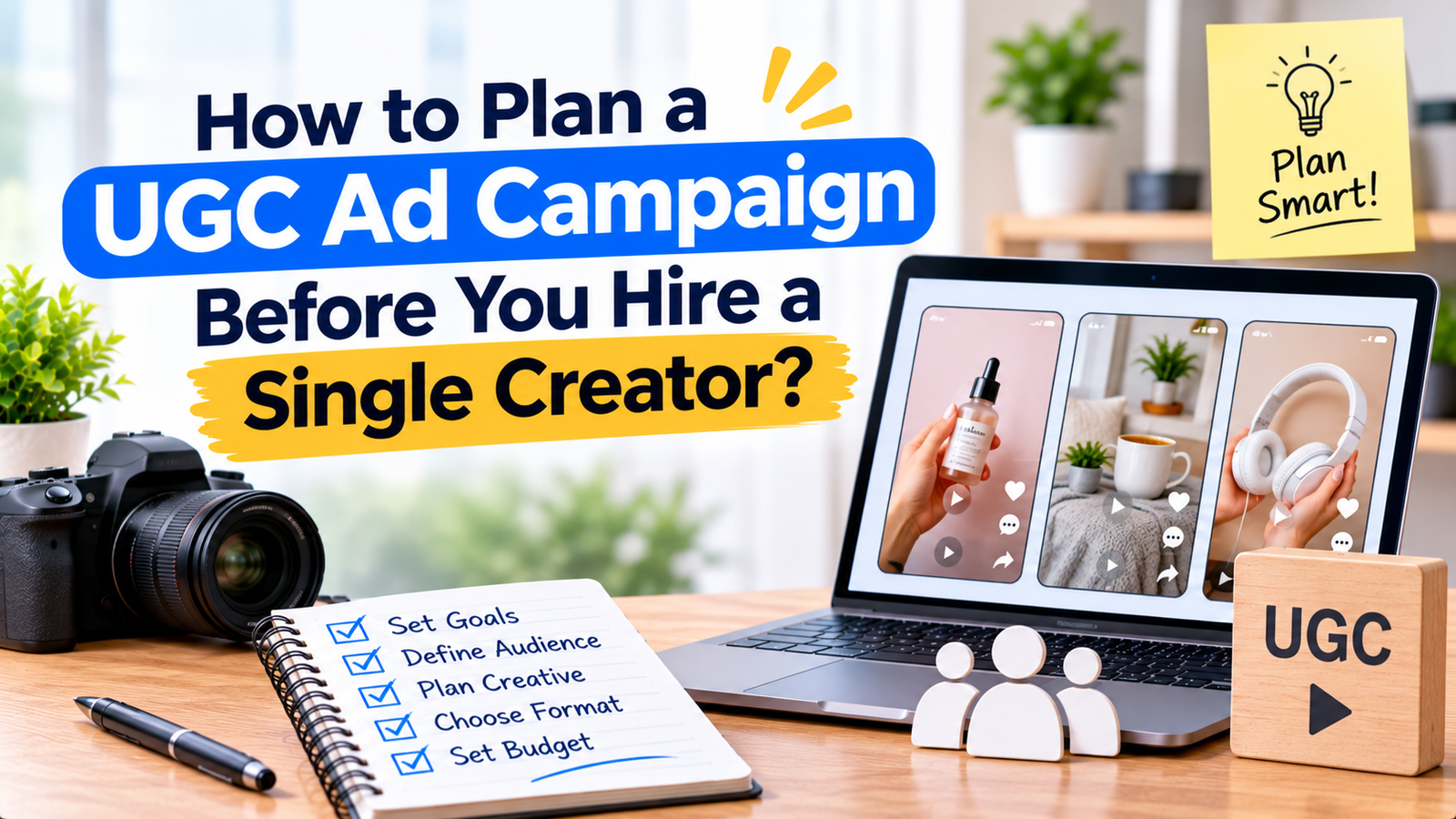
Most UGC campaigns go wrong before filming even begins. A brand finds a few creators, ships out products, waits for videos and then discovers the content does not quite fit an ad. The creators did their job. The plan behind them was missing.
Planning a UGC ad campaign properly takes a little more thought up front, but it saves money, revisions and frustration later. This guide walks through how to plan one step by step, from the first question to the first test.
Start With a Clear Goal for the Campaign
Before choosing creators or writing briefs, decide what the content needs to achieve. Is it meant to introduce your product to people who have never heard of you? To answer doubts that stop warm visitors from buying? To bring back shoppers who left items in their cart?
Each goal calls for different content. A video for cold audiences leads with a problem and keeps the product secondary, while a video for warm audiences can show the product at work and answer specific objections. Without a goal, the content tends to be a bit of everything and good at nothing.
Build Your Plan on Customer Research
The strongest UGC is built from what customers actually say. Before spending anything, read your reviews, support emails, social comments and any messages from buyers. Highlight the problems people describe, the words they use and the moments that made them decide to buy.
This research is the base of any solid UGC creative strategy. It tells you which angles are worth making videos about, instead of leaving you to guess what feels clever in a meeting. A few hours with real customer language often shapes the whole campaign.
Turn Research Into Angles
Group what you found into a handful of angles, each one a different reason to care. One angle might be saving time, another avoiding a common frustration and a third showing that real people trust the product. Choose a small number to begin with, because each angle will need its own content.
Write One Sentence Per Angle
For each angle, write a single plain sentence describing the story the video should tell. If you cannot say it in one sentence, the idea is not clear enough yet for a creator to bring to life.
Decide What You Actually Need From Creators
UGC is not one thing. Some ads feature a creator talking straight to camera. Others focus on the product being used, with the creator mostly heard in the background. Some are casual and lo-fi, while others are tidier and more produced. Decide which styles suit your product and audience before you look for anyone.
Also decide what you need delivered. Do you want finished edits, raw footage, or both? Extra openings you can test against the same video? Close-ups of the product? Planning these deliverables early avoids awkward conversations and gives you far more material from the same shoot.
Find Creators in the Right Places
The best first place to look is often your own customers. People who already buy and love your product speak about it honestly, and many are glad to be paid for content they might have posted anyway. Social platforms are another good source, since you can watch real examples of how a creator presents products.
Marketplaces and agencies can save time, though quality varies, so apply the same checks everywhere. Look beyond follower counts. Because the content usually runs in your own ad account, delivery, clarity and fit with your product matter much more than audience size.
Write a Brief That Guides Without Controlling
A good brief is short, clear and generous. It explains the goal, the audience, the angle and the key moments the video should include, then leaves room for the creator's own voice.
Include a couple of reference ads so the creator can see the style you like, along with anything that must be avoided, such as claims you cannot make. Do not write every word for them. A creator speaking in their own words almost always sounds more believable than one reading a script.
Ask for More Than One Opening
The first few seconds decide whether anyone keeps watching, and recording different openings costs little extra during the same session. Ask each creator for several different first lines. These become easy variations to test later.
Agree on Usage Rights in Writing
Before any work begins, agree on how you can use the content, where, and for how long. Paid ads, partnership-style ads and reuse on your website may each need explicit permission. Unclear rights are one of the most common sources of trouble after a video starts performing.
Plan How You Will Test the Content
UGC is not a guarantee. Each video is an idea that needs to prove itself, so plan the test before the content arrives. Decide which videos will run, how they will be grouped and what you want to learn.
Disciplined creative testing keeps the results readable. Group videos by angle so you can compare messages fairly, keep the audience and budget consistent, and change one thing at a time. If you launch everything at once with no structure, you will have plenty of data and very few answers.
Keep testing separate from your main campaigns where possible. New videos belong in a testing setup until they have shown they deserve more budget, which protects the ads that already work.
Read the Results Properly
Give videos enough time and budget to show a pattern before judging them. Then look at the whole chain instead of one number. How many people stopped to watch? How many stayed? How many clicked? What did each result cost?
A video with a strong opening but weak sales might need a different message after the first seconds. One that holds attention but earns few clicks may need a clearer next step. Reading the chain tells you what to fix, which is far more useful than simply labeling videos winners and losers.
Turn Winners Into the Next Round
When something works, understand why before making more. Was it the angle, the opening, the creator or the format? Then brief the next round around that learning, with new openings, new creators or new versions of the same idea.
Keep every raw clip, opening and testimonial line in an organized folder. Over time, this becomes a library you can remix into fresh ads without commissioning a new shoot each time performance drops.
Do Not Forget the Campaign Behind the Content
Great creative still needs a sound setup. Tracking must record results accurately, campaigns must be structured so each video gets a fair chance and budgets must be raised carefully. This is where a performance media buyer earns their place, making sure the content you plan so carefully is delivered and measured properly.
If you want to see how planning, creative and media buying fit together in real accounts, you can browse the case studies and read how problems were diagnosed before anything was changed.
Common Planning Mistakes
The most common mistake is hiring first and thinking later. Without a goal and a researched angle, creators have nothing to build on. Another is ordering a single video from each creator, which leaves you with almost nothing to test. A third is vague briefs, which lead to content that cannot be used.
Finally, many brands forget usage rights and measurement until it is too late. Decide both before the first video is filmed.
Frequently Asked Questions
How many creators do I need for a UGC campaign?
Start with a small group so you can compare styles and angles without overspending. Once you see what works, expand or repeat with the best performers.
How long does it take to plan a UGC ad campaign?
Planning can often be done in days if your customer research is ready. The research and brief usually take longer than the filming itself.
Should I send creators a script?
Usually an outline with key points works better than a word-for-word script. Creators sound more natural when they put ideas in their own words.
How do I know if UGC is working for my brand?
Compare the videos against your other ads in similar conditions, looking at how many people watch, click and buy, and what each result costs.
Do I need to pay for usage rights separately?
It depends on the agreement. Always discuss usage rights, including paid ad use and duration, before work begins and confirm them in writing.
Final Thoughts
A good UGC campaign is decided long before the camera starts rolling. Start with a goal, build angles from real customer language, decide what you need from creators, write a brief that leaves room for personality and plan how you will test. When the plan is clear, the content has a job to do, and every video teaches you something.
If you would like help planning a UGC campaign for your own account, you are welcome to get in touch and talk through where to begin.
Ready to Implement This in Your Ad Account?
Stop guessing why your Meta ads are stalling. Let's look inside your Ads Manager together and find the high-leverage growth bottlenecks.
Book 15-Minute Strategy Call →