How to Write an Ad Creative Brief Designers and Editors Can Actually Use
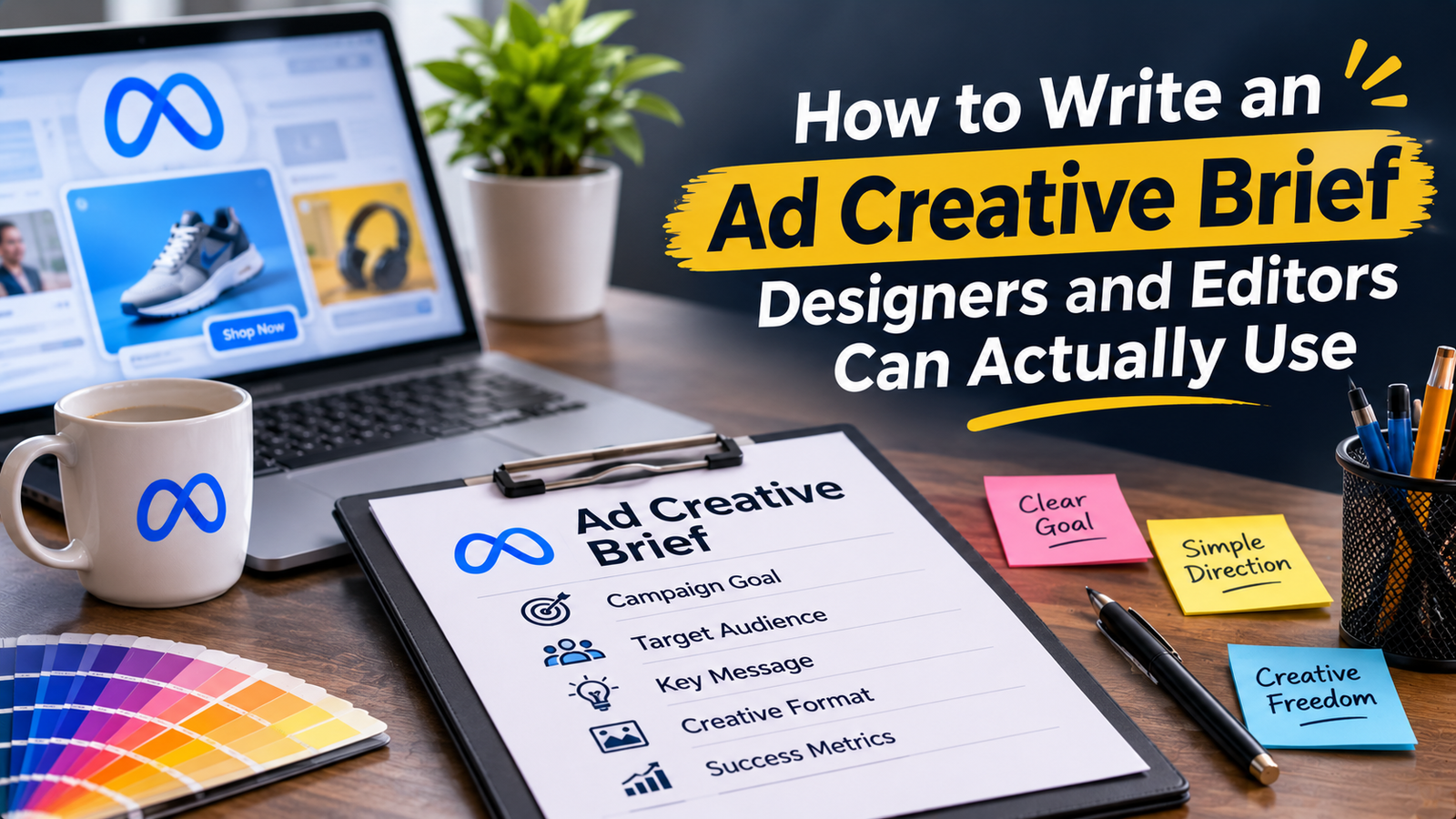
Creative teams often receive briefs filled with adjectives and almost no commercial direction. Designers can follow every visual request and still deliver assets that fail to answer a buyer’s question. The purpose of a creative brief is to translate research into decisions the production team can actually execute. The following framework makes each deliverable easier to build, review, and test.
The objective is not to produce more advertising material for its own sake. It is to make each message useful to a person considering a purchase, while giving the advertising team a clear reason to test it. Good decisions begin with customer evidence and continue through the creative, landing page, and eventual business result. That connection is what makes creative strategist useful beyond the first impression.
Start with the commercial problem
An effective brief explains the business decision behind the asset, not only the desired appearance. A request to make something premium gives a designer little strategic direction. If the underlying problem is a weak landing page, the brief should acknowledge that creative alone will not solve it.
A subscription brand might need to explain why its higher price includes more useful support rather than asking for a luxurious visual. State the audience, offer, barrier to purchase, and desired action before describing design preferences. The useful test is whether someone unfamiliar with the project can understand the message and the next step without a private explanation from the team. This is where Creative Strategist helps turn a broad creative preference into a decision that can be checked against actual audience behavior.
Describe one audience situation
Generic demographic labels rarely tell a creator what the buyer is thinking. A real purchasing situation creates more specific imagery and language. Avoid turning a broad market stereotype into a supposedly universal customer insight.
Parents comparing two learning apps may care about supervision and time commitment more than generic age segmentation. Include the situation that triggers demand and the question the prospect needs answered. The useful test is whether someone unfamiliar with the project can understand the message and the next step without a private explanation from the team.
Separate the angle from the format
The advertising angle explains why someone should care; the format determines how that claim is communicated. Mixing them creates repetitive assets. Changing font, color, or video length without changing the persuasive idea is not a new angle.
A convenience angle for a portable charger could appear as a static comparison, an in-hand demonstration, or a creator story. Write the core message first and then choose the format that makes it easiest to prove. The useful test is whether someone unfamiliar with the project can understand the message and the next step without a private explanation from the team. This is where Hook Development helps turn a broad creative preference into a decision that can be checked against actual audience behavior.
Specify evidence and claim boundaries
Editors need to know which claims are verified, which demonstrations are possible, and which customer quotes have permission. Unclear boundaries invite risky embellishment. Accuracy is part of creative quality, especially when an attention-grabbing line could be interpreted as a guarantee.
A wellness brand may have customer feedback but no evidence for clinical-sounding outcomes. Supply approved product facts, usable footage, disclaimers, and prohibited claims in one accessible place. The useful test is whether someone unfamiliar with the project can understand the message and the next step without a private explanation from the team.
Give hooks a job to do
A creative brief should identify what the first moments need to establish. A generic instruction to make it punchy does not explain the required information. Avoid requesting dozens of near-identical hooks that do not test different audience motivations.
For an unfamiliar kitchen gadget, viewers may first need to understand the problem before they care about the product. Propose two or three distinct openings with a reason each might work. The useful test is whether someone unfamiliar with the project can understand the message and the next step without a private explanation from the team. This is where Creative Testing helps turn a broad creative preference into a decision that can be checked against actual audience behavior.
Define a useful production checklist
A good brief makes execution easier by identifying placement, aspect ratio, safe areas, footage, captions, and deliverables. These details reduce revisions that contribute no strategic value. Do not specify every gesture so tightly that the final result feels rehearsed.
A vertical creator video may need unobstructed space for native app interface elements and subtitles. Specify practical requirements while leaving enough room for the creator to use natural language and authentic movements. The useful test is whether someone unfamiliar with the project can understand the message and the next step without a private explanation from the team.
Include the test hypothesis
A brief becomes more powerful when it states what the campaign should teach. This allows designers and analysts to discuss results using the same question. A hypothesis is a learning tool, not a promise that one concept will win.
A team might compare a demonstration-first execution with an objection-first execution for the same product. Record the expected outcome, primary success metric, and the variable being changed. The useful test is whether someone unfamiliar with the project can understand the message and the next step without a private explanation from the team. This is where Static Ad Strategy helps turn a broad creative preference into a decision that can be checked against actual audience behavior.
Create a feedback rule before review
Unstructured stakeholder comments can strip the original purpose from a creative. Feedback works better when reviewers assess the message against the brief. Keep visual taste separate from evidence that the ad is failing commercially.
A reviewer asking for a bigger logo should explain whether that change improves recognition or only reflects personal preference. Ask reviewers to identify factual errors, clarity problems, and mismatch with the chosen audience situation. The useful test is whether someone unfamiliar with the project can understand the message and the next step without a private explanation from the team. This is where Video Ad Strategy helps turn a broad creative preference into a decision that can be checked against actual audience behavior.
Frequently Asked Questions
What is the first step in creative strategist?
Start with one customer question and a clear outcome. Review the evidence available, then develop a specific idea you can explain and evaluate.
How many creative ideas should a brand test?
Start with a manageable number of genuinely different concepts. The suitable number depends on campaign volume, budget, and how much data each decision requires.
Should a business prioritize clicks or conversions?
Use metrics that match the campaign objective. Clicks help reveal interest, but lead quality, purchases, and acquisition economics show whether the response is commercially useful.
Can one customer insight support several ad formats?
Yes. A valid insight can support image, video, and creator-led ads when each execution communicates the same truthful benefit in a suitable way.
When should an underperforming creative be changed?
Investigate the offer, audience, landing page, tracking, and message first. Change the element with the strongest evidence of causing the problem instead of following a fixed calendar.
Final Verdict
Better creative strategist begins with a useful question and ends with a better decision. The strongest teams connect a clear buyer need to truthful evidence, thoughtful execution, and a measurement plan. They resist cosmetic changes that create activity without learning and keep the original offer understandable throughout the customer journey.
Build a focused hypothesis, choose an execution that answers it, and review real business outcomes before expanding spend. If you want to connect creative decisions with paid media execution, review the relevant services and contact Zohaib Raja to discuss the specific challenge your campaigns need to solve.
Ready to Implement This in Your Ad Account?
Stop guessing why your Meta ads are stalling. Let's look inside your Ads Manager together and find the high-leverage growth bottlenecks.
Book 15-Minute Strategy Call →