
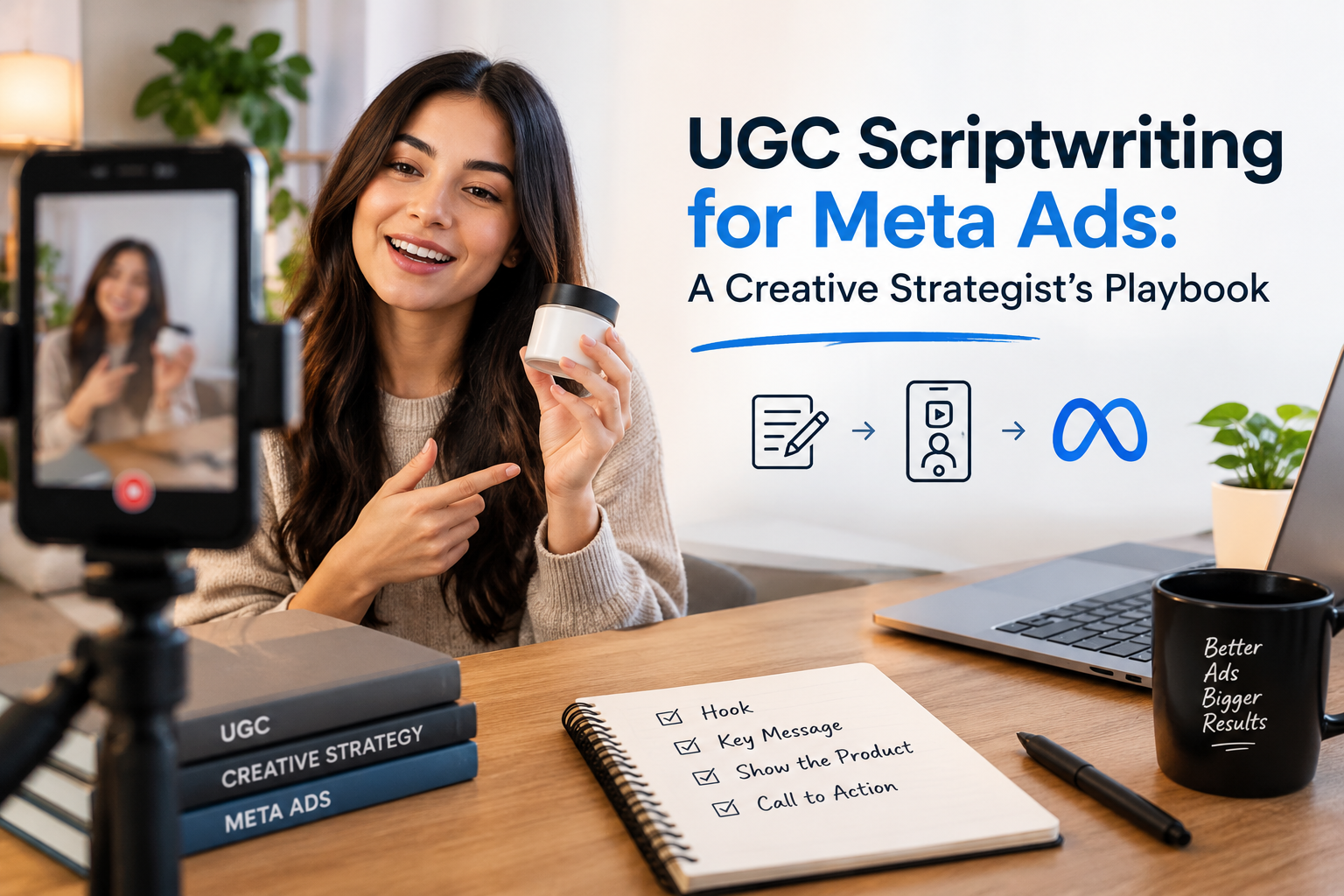
Most UGC ads fail before the creator even presses record. The product is fine, the creator is fine, but the script reads like a brand trying to sound like a person. Viewers feel that gap in about two seconds and scroll on.
Good UGC scriptwriting for Meta ads fixes this at the source. In this guide, I'll share the structure I use as a creative strategist to turn product benefits into scripts that feel native, hold attention and push people to act.
Why UGC Scriptwriting Matters on Meta
Native Content Beats Polished Content
Meta's feed is full of personal videos from friends and creators. An ad that looks like one of those gets watched. An ad that looks like a commercial gets skipped. That is why UGC creative strategy has become a core part of almost every direct-response account I work on.
The Script Is the Real Variable
Many brands blame the creator, the lighting or the editing when a UGC ad underperforms. In my experience, the script is usually the real issue. The same creator can deliver a weak ad and a winning ad in the same afternoon, simply because the words were different.
The 4-Part UGC Script Structure
Almost every UGC ad that works follows the same skeleton. You can change the tone, the product and the creator, but the order stays similar.
1. The Hook (0-3 Seconds)
The hook must stop the scroll. It should speak to the customer's moment, not describe the product. “This moisturizer has hyaluronic acid” is a feature. “My skin was so tight by 3 p.m. I stopped wearing makeup” is a moment.
2. The Problem and Agitation
Spend a few seconds on the frustration your buyer already feels. Use their own words from reviews, comments and support tickets. When the viewer thinks “that is exactly me,” you have earned the next ten seconds.
3. The Proof and Solution
Now introduce the product as the thing that changed the situation. Show it in use, mention a specific result and keep the claim believable. One real detail (“by day four, I noticed...”) beats three vague promises.
4. The Call to Action
A UGC CTA should sound like a recommendation, not a sales pitch. “If you've been struggling with this, try it, there's a discount running right now” works far better than “Buy now and save 20%.”
Hook Development: Where Scripts Win or Lose
The first three seconds decide whether the rest of your script even gets seen. That is why serious hook development deserves more time than the body of the ad.
Here are hook angles worth testing:
• Problem-first: “If your ads stop working after a week, watch this.”
• Result-first: “I replaced three products with this one.”
• Objection-first: “I thought this was a gimmick until I tried it.”
• Curiosity-first: “Nobody tells you this about buying supplements online.”
• Identity-first: “This is for anyone who works from home and sits all day.”
Write at least five hooks for every script. Keep the body the same and change only the opening line. This gives you a clean test and teaches you what your market actually responds to.
Common UGC Scriptwriting Mistakes
Writing Like an Advertiser
If a line would look natural on a billboard, it will sound strange coming from a creator. Read every script out loud. If you would never say it to a friend, rewrite it.
Packing in Too Many Benefits
One video should carry one main idea. Trying to cover every feature makes the ad feel like a list and weakens the emotional pull. Save the other benefits for other scripts.
Ignoring the Format
A script for a vertical Reel is different from one for a feed video. Planning your video ad strategy early helps you decide the length, pacing, on-screen text and shot list before filming starts.
How to Test Your UGC Scripts
A great script is still a hypothesis until the data confirms it. A simple creative testing structure keeps this clean:
1. Pick one angle per script (for example, saving time or social proof).
2. Test three to five hooks on the same body.
3. Give each ad enough spend to produce meaningful data before cutting it.
4. Look at hook rate, hold rate, click-through rate and cost per purchase together, not one metric alone.
5. Turn the winning hook into new variations instead of starting over.
If your testing feels random, it usually means the account lacks structure on the campaign side too. A Meta ads specialist can set up the campaign so each script gets a fair test and winners are easy to scale.
When to Bring in Outside Help
Some brands can handle scripting in-house. Others need a fresh perspective, especially when ads are tired, costs are rising or the team is guessing at angles. Working with a Facebook ads expert who understands both the creative and the media buying side saves months of trial and error, because the message and the campaign decisions support the same goal.
Final Thoughts
UGC scriptwriting for Meta ads is not about sounding casual. It is about understanding your buyer well enough to say the right thing in the right order. Start with the customer's real moment, build the script around the hook, problem, proof and CTA structure, and then let testing show you what deserves more budget.
Write more hooks than you think you need, keep each video focused on one idea and treat every result as information for the next script. Do that consistently and your creative stops being a guessing game and becomes a repeatable system.
Ready to Implement This in Your Ad Account?
Stop guessing why your Meta ads are stalling. Let's look inside your Ads Manager together and find the high-leverage growth bottlenecks.
Book 15-Minute Strategy Call →