News
Can Your Advertising Message Qualify Better Leads Before They Complete the Form?
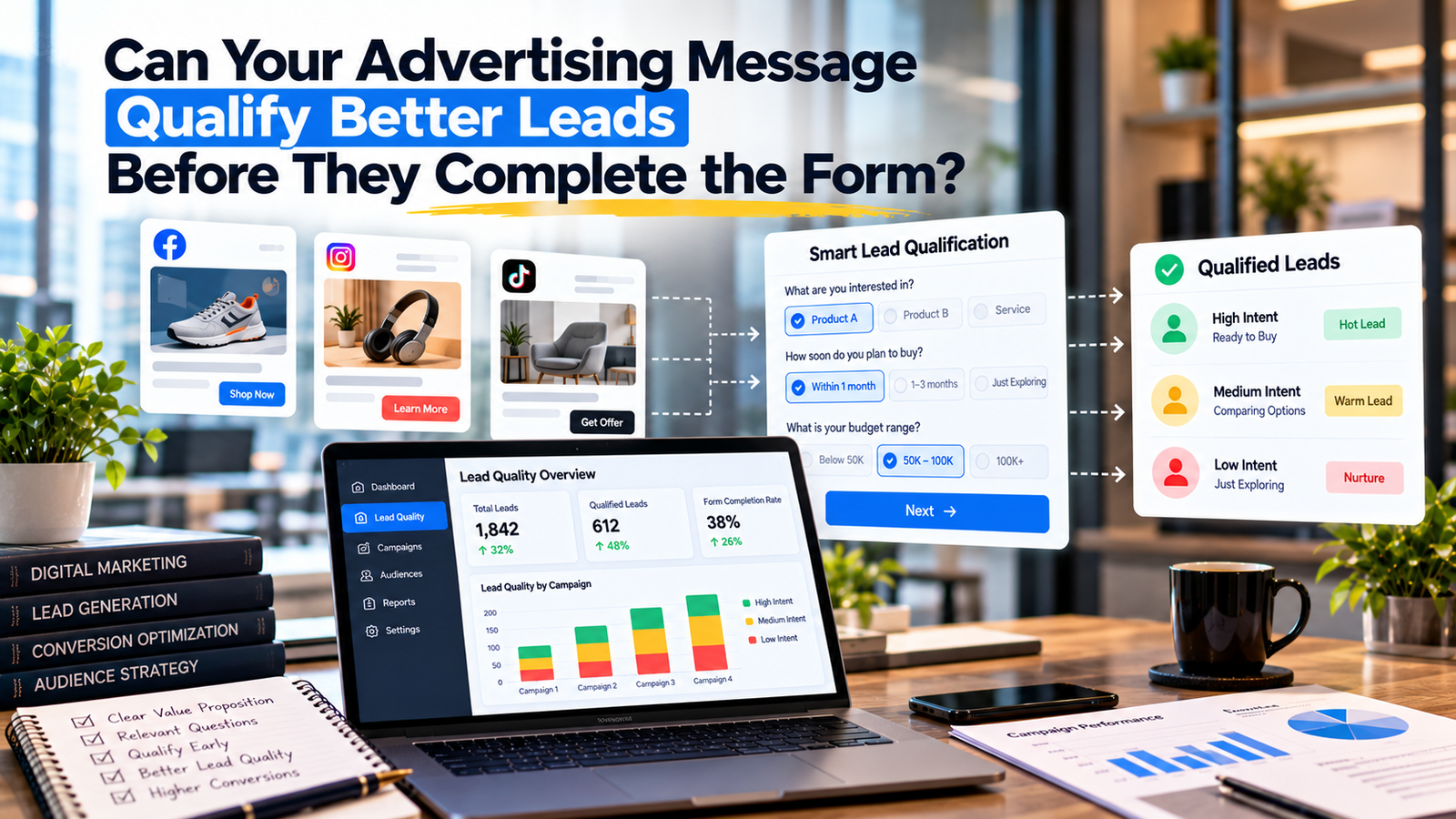
Generating more enquiries is often treated as the main objective of a lead-generation campaign. However, a larger number of form submissions does not always create more sales. If most prospects have the wrong budget, need an unavailable service, or are not ready to buy, the sales team receives more work without gaining more customers.
A strong lead qualification strategy begins before a person completes the form. The advertisement itself can communicate who the service is for, what problem it solves, and what level of commitment it requires.
By setting clear expectations early, businesses can attract more suitable prospects and discourage poor-fit enquiries without making the campaign feel unwelcoming.
What Is a Lead Qualification Strategy?
A lead qualification strategy is a system for identifying which prospects are most likely to become suitable customers. It considers factors such as need, budget, location, authority, urgency, and fit with the service.
Qualification usually happens during a sales call or through questions on a form. However, waiting until this stage means the business has already paid for the click and spent time processing the enquiry.
Advertising can perform part of this work earlier. The message, creative, offer, and landing page can help prospects decide whether the service matches their situation.
An experienced creative strategist considers both attention and customer fit when developing advertising messages.
Why Do Campaigns Generate Poor-Fit Leads?
Poor lead quality is not always caused by incorrect audience targeting. A campaign can reach the intended audience and still attract unsuitable enquiries if its message creates the wrong expectations.
Common causes include:
· Promising results without explaining the required commitment
· Using broad language that applies to almost everyone
· Promoting affordability when the service has premium pricing
· Focusing on a free consultation without describing its purpose
· Hiding important eligibility requirements
· Using a form that asks no meaningful questions
· Optimising campaigns only for the cheapest submissions
These approaches may reduce the reported cost per lead, but they can also increase the number of people who were never realistic customers.
Understanding the person behind the campaign is important. My professional background and marketing approach are built around connecting creative decisions with genuine performance outcomes rather than chasing surface-level numbers.
How Can Advertising Copy Improve Lead Quality?
Advertising copy should help the right prospect recognise that the service is relevant while giving unsuitable prospects enough information to make an honest decision.
Describe the Customer Clearly
Instead of saying, “We help businesses grow,” the advertisement could identify the type of company, challenge, or growth stage it serves.
Specificity improves relevance. A message written for established ecommerce brands will naturally attract a different audience from one written for first-time business owners.
The objective is not to exclude people unnecessarily. It is to create clarity about who will receive the greatest value.
Explain the Problem Precisely
Broad claims often attract broad enquiries. A more precise description of the problem allows prospects to evaluate whether their situation matches the service.
For example, “Improve your marketing” communicates less than “Reduce the number of paid leads that fail to become qualified sales opportunities.”
The second version addresses a recognisable business problem and helps the reader understand the intended outcome.
Set Realistic Expectations
Advertising should not imply that every customer will achieve instant or effortless results. Clear language about timelines, processes, responsibilities, and requirements can prevent later disappointment.
A suitable prospect will often appreciate honesty. Someone looking for an immediate shortcut may decide not to submit the form, which protects the sales team from an unproductive conversation.
Should Pricing Be Mentioned in the Advertisement?
Pricing can be a useful qualification tool, but whether it should appear depends on the service, market, and sales process.
Showing a starting price or minimum investment can reduce enquiries from prospects who cannot meet the budget. This may increase the recorded cost per lead because fewer people complete the form, but the remaining enquiries may be significantly stronger.
Businesses that cannot display an exact price can still communicate positioning through phrases such as “for established brands,” “custom enterprise solution,” or “designed for companies ready to scale.”
The message must remain accurate. Artificially presenting an ordinary service as exclusive will not improve long-term performance.
My paid advertising services examine the relationship between messaging, offers, creative, landing pages, and campaign data to identify where lead quality can be improved.
How Can Creative Visuals Qualify Prospects?
Creative qualification is not limited to written copy. Images and videos also influence who responds.
A polished corporate visual may attract a different customer from an informal user-generated video. A product demonstration may appeal to people comparing practical features, while a customer story may connect with prospects who need proof before acting.
Visuals can communicate:
· The type of customer being served
· The context in which the service is used
· The expected level of quality
· The complexity of the problem
· The style and personality of the brand
· The result the customer wants to achieve
The creative should match the actual experience. When advertising appears premium but the landing page feels unclear or unfinished, trust can disappear after the click.
What Should a Qualification-Focused Landing Page Include?
The landing page should continue the promise and positioning introduced by the advertisement. A sudden change in language, offer, or audience can create confusion.
An effective qualification-focused page should explain:
· Who the service is designed for
· Which problem it addresses
· What the process involves
· What the customer can reasonably expect
· Relevant proof or examples
· The next step after submitting the form
Strong campaign case studies can help suitable prospects assess whether the provider has experience with comparable goals or challenges.
The page should not make qualified people search for essential information. Clear details build confidence and help prospects decide whether continuing is worthwhile.
Which Form Questions Can Improve Qualification?
A form should collect enough information to guide the next conversation without becoming unnecessarily difficult to complete.
Useful questions may cover:
· The required service
· The main business challenge
· Approximate budget
· Preferred starting date
· Location or market
· Company size
· Current marketing activity
Multiple-choice options can make completion easier and create consistent data for campaign analysis. Open-text questions can reveal how clearly the prospect understands the problem.
However, adding too many fields may reduce legitimate enquiries. Each question should have a clear purpose. If the sales team never uses the answer, the field may not be necessary.
How Should Qualified-Lead Performance Be Measured?
Cost per lead alone cannot show whether qualification is improving. Businesses should track what happens after submission.
Important measurements include:
· Percentage of leads that meet the qualification criteria
· Contact and response rate
· Appointments booked
· Appointment attendance
· Proposals issued
· Customers acquired
· Revenue generated
· Cost per qualified opportunity
· Customer acquisition cost
A campaign producing fewer leads can still be more profitable if a greater percentage become customers. Reviewing results and client outcomes provides better context than judging success through the initial conversion alone.
Marketing and sales teams should agree on what qualifies as a valuable lead. Without a shared definition, feedback becomes inconsistent and campaign decisions become unreliable.
Can Qualification Go Too Far?
Yes. Excessive qualification can block promising prospects who do not fit the expected pattern perfectly.
A new company may have strong funding. A prospect with a modest initial budget may have significant long-term value. Someone selecting a later timeline may still be worth nurturing.
Qualification should guide prioritisation, not create an inflexible barrier. Businesses should test changes carefully and compare their effect on both lead quality and total sales.
Final Thoughts
Better lead generation is not simply about collecting more contact details. It is about attracting people whose needs, expectations, budgets, and timelines match the business.
A lead qualification strategy can begin with the advertisement by using specific customer language, realistic promises, appropriate creative, and clear offer positioning. The landing page and form can then confirm whether the prospect is ready for the next step.
When qualification is connected with sales outcomes, businesses can reduce wasted follow-up, improve customer conversations, and invest in campaigns that produce genuine opportunities.
If your campaigns generate enquiries but few suitable customers, you can discuss your advertising and lead-quality challenges before increasing the budget.
Frequently Asked Questions
What makes a lead qualified?
A qualified lead has a relevant need, fits the company’s customer criteria, and has a realistic ability or intention to move forward.
Will stronger qualification reduce lead volume?
It may reduce total submissions, but the remaining leads can be more relevant. The objective is profitable customer acquisition, not the largest possible lead count.
Should every advertisement include pricing?
No. Pricing is useful when it helps prospects make a better decision, but some services require discovery before an accurate price can be provided.
How many questions should a lead form contain?
There is no universal number. Use only the questions needed to determine fit and prepare an appropriate response.
How can a business determine why leads are unsuitable?
Record consistent reasons inside the CRM, such as budget, location, wrong service, poor timing, or no response. Review these reasons by campaign and advertisement.
Ready to Implement This in Your Ad Account?
Stop guessing why your Meta ads are stalling. Let's look inside your Ads Manager together and find the high-leverage growth bottlenecks.
Book 15-Minute Strategy Call →