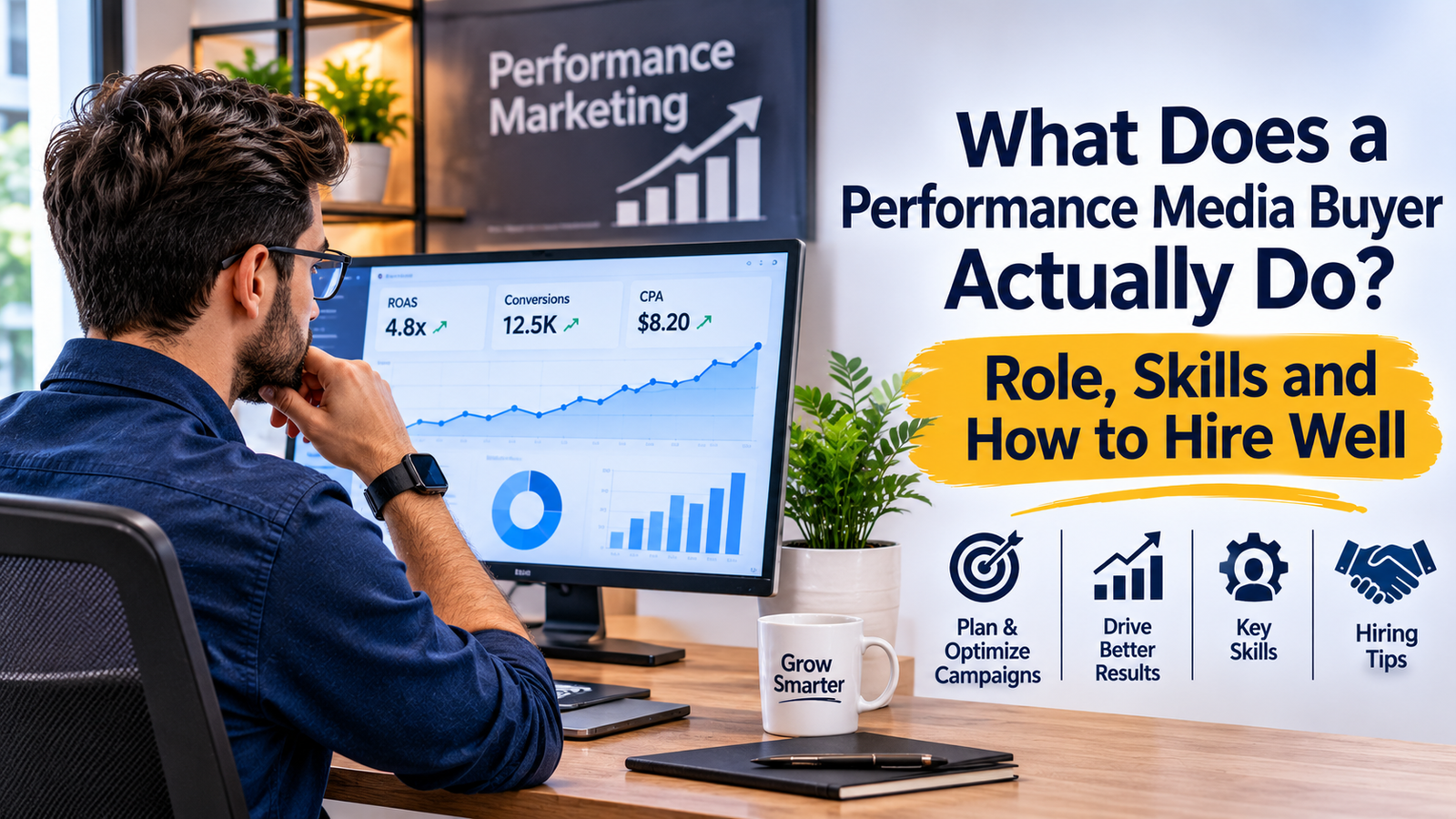
What Does a Performance Media Buyer Actually Do? Role, Skills and How to Hire Well
Job titles in paid advertising are slippery. One company calls someone a media buyer, another a paid social manager and a third simply “the person who runs our ads.” They may do very different work under similar names, which makes hiring confusing and expectations messy.
A performance media buyer is the person responsible for turning an advertising budget into measurable results. This guide explains what the role really involves, which skills matter, how it differs from neighboring roles and what to check before you hire one.
What a Performance Media Buyer Does
At the simplest level, a performance media buyer plans, launches, monitors and improves paid campaigns on platforms such as Meta, Google and TikTok, with the goal of driving results like sales or leads at a cost the business can afford. The word performance matters. Success is judged by outcomes, not by impressions or clicks alone.
Day to day, the work is a mix of structure, numbers and judgment. Here is what that looks like in practice.
Setting Up and Structuring Campaigns
A good buyer decides how campaigns, ad sets and ads are organized so budget is used efficiently and results are readable. Messy structure splits spend into pieces that are too small to learn from. Clear structure makes it obvious what is working.
Managing Budgets
Deciding how much to spend, where and when is a core part of the job. That includes raising spend carefully when results are stable, reducing it when they are not and avoiding large sudden changes that unsettle delivery.
Making Sure Tracking Tells the Truth
Every decision depends on data, so the buyer verifies that purchases, leads and other events are recorded correctly. They know that platform numbers rarely match store numbers perfectly and can explain why.
Optimizing Based on Results
Watching performance and adjusting delivery, audiences, placements and budgets belongs to the role too. The best buyers are patient. They make deliberate changes and wait for evidence instead of reacting to every daily wobble.
Reporting and Explaining
A buyer who cannot explain what happened is only half useful. Clear reporting covers what changed, why it likely changed and what happens next, in language the business owner can act on.
How the Role Differs From Its Neighbors
Media Buyer vs Creative Strategist
The media buyer controls how ads are delivered and measured. A creative strategist controls what the ads say and why, using customer research and performance data to guide creative decisions. When the two share information regularly, the buyer reports what the numbers show and the strategist turns it into the next round of ideas.
Media Buyer vs Designer or Editor
Designers and editors produce the ads. The media buyer decides how those ads are tested and funded. One is craft and execution, the other is delivery and measurement.
Media Buyer vs Marketing Manager
A marketing manager usually oversees the broader picture, including brand, email, content and budgets across channels. A media buyer goes deeper into paid platforms and works inside the ad accounts daily.
Media Buyer vs Platform Specialist
Some people specialize in one platform, such as Meta. A dedicated Meta ads specialist knows that platform in depth, while a broader media buyer may manage several channels. Which one you need depends on where your budget goes.
Skills That Matter Most
Platform knowledge is the visible skill, but it is also the easiest to learn. The harder skills are judgment, analysis and communication.
Analytical Thinking
A good buyer reads numbers as a chain, not as isolated figures. They can tell whether a problem sits in the creative, the structure, the tracking or the page after the click.
Understanding the Offer and the Funnel
Ads cannot rescue a weak offer or a confusing landing page. Strong buyers look beyond the ad account and notice when the problem lives elsewhere.
Testing Discipline
They design tests with clear questions, change one variable at a time and avoid declaring winners too early.
Communication and Honesty
The best buyers admit uncertainty, explain trade-offs and tell clients when a budget is too small or an offer is not ready. That honesty saves money.
When Your Business Needs One
Not every business needs a dedicated media buyer from day one. Many small brands start by running ads themselves. The need usually appears when spend grows, when managing the account takes more time than you can give or when results plateau and you cannot tell why.
Another sign is a messy account: too many campaigns, unclear naming, inconsistent tracking and no clear testing plan. A buyer can bring order, which often improves results before any new creative is made.
How to Hire Well
Be Clear About What You Need
Before looking for anyone, decide which platforms matter, what monthly spend they will manage and what success looks like. A person who runs a single small account and one who manages complex multi-channel budgets are different hires.
Ask How They Think, Not Just What They Know
Useful questions include how they check tracking, how they decide what to test, what they do when results drop suddenly and how they decide when to scale. Clear, specific answers matter more than impressive jargon.
Look at Real Evidence
Ask for examples of past work, including problems and how they were solved. Reading detailed case studies shows how someone explains their reasoning, not just their results.
Watch for Red Flags
Be careful with guaranteed returns, vague processes, constant excuses blamed on the platform and a lack of questions about your business. A good buyer wants to understand your margins, customers and offer first.
Ways to Work Together
Businesses engage media buyers in different ways. Some hire a full-time employee. Others work with a freelancer on a monthly arrangement, or with an agency. Each has trade-offs in cost, attention and available skills.
Whichever route you choose, agree on reporting, access to the ad account and what happens if results are slow. Always keep ownership of your ad account and data.
Frequently Asked Questions
What is a performance media buyer?
A performance media buyer plans and manages paid advertising campaigns with the aim of driving measurable results, such as sales or leads, at a sustainable cost.
Is a media buyer the same as a media planner?
Not exactly. Planners focus on strategy and which channels to use, while buyers handle the purchasing and optimization of the ads themselves. In small teams, one person may do both.
Do I need a media buyer and a creative strategist?
Often, yes, as spend grows. One manages delivery and measurement, while the other shapes the message. Smaller businesses sometimes combine the roles in one person.
How do I know if my media buyer is doing a good job?
Look for clear reporting, honest explanations when results dip, a visible testing plan and decisions that make sense to you.
How long does it take to see results?
Early signals may appear within weeks, but meaningful learning usually takes longer. Timing depends on budget, offer, creative and tracking.
Final Thoughts
A performance media buyer is less a button-presser than a translator between budget and results. They set up structure, protect data quality, test with discipline and explain what is happening in plain language. Hire for judgment and honesty, not just platform experience, and make sure creative and media work together.
If you would like to talk through whether your account needs a dedicated buyer or a different kind of support, you are welcome to get in touch and we can look at where things stand.
Ready to Implement This in Your Ad Account?
Stop guessing why your Meta ads are stalling. Let's look inside your Ads Manager together and find the high-leverage growth bottlenecks.
Book 15-Minute Strategy Call →