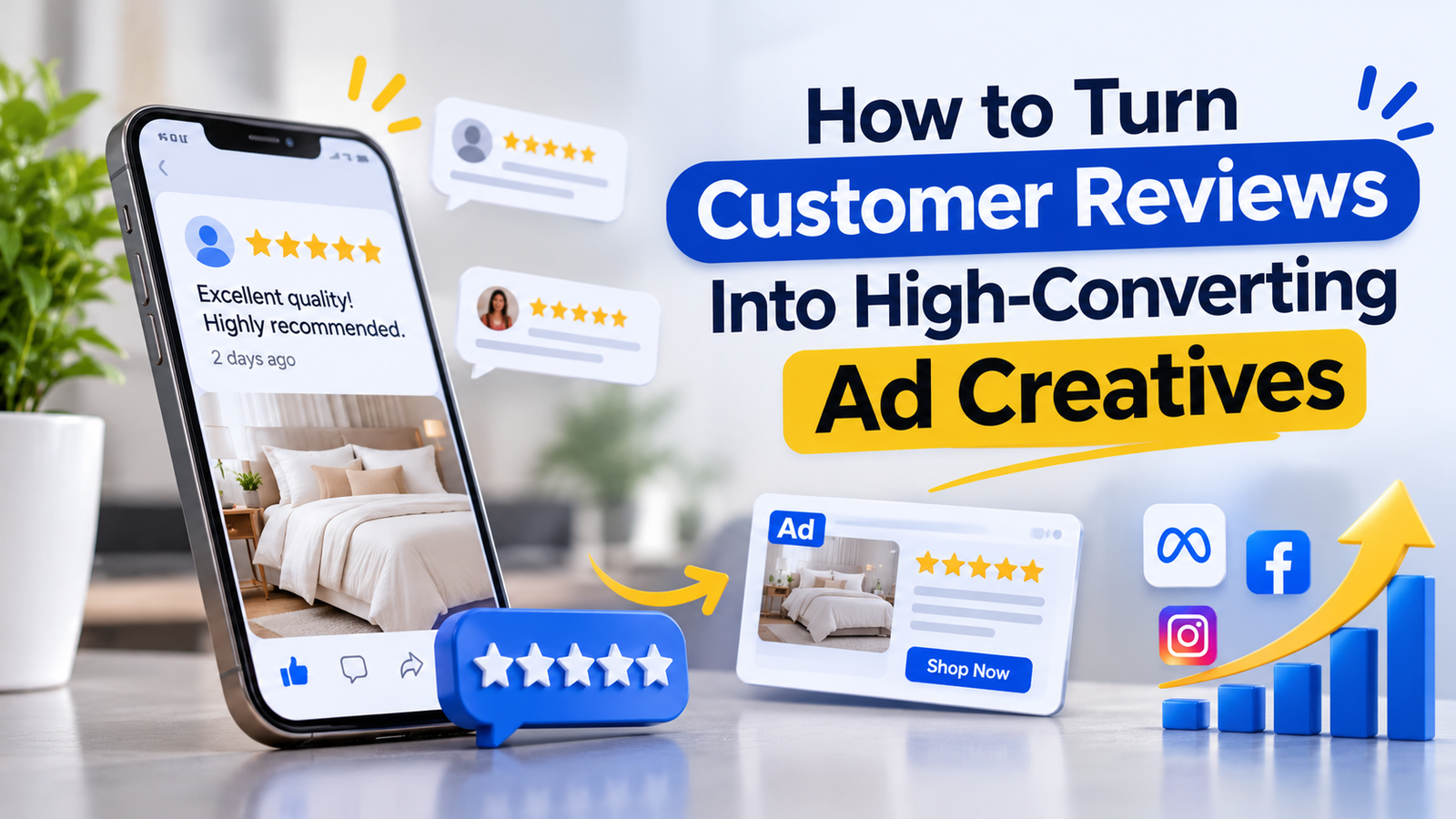
Your customers might already be telling you what your next successful advertisement should say. Every customer review contains valuable information about buying decisions, product expectations, and problems people want to solve. Unfortunately, many businesses collect reviews without using them to improve advertising campaigns. Understanding customer feedback can help brands develop stronger advertising messages that connect with potential buyers.
Why Customer Reviews Matter in Advertising
Customer reviews reveal what buyers actually value about a product. While businesses often focus on technical specifications, customers usually describe practical benefits, frustrations, and experiences that influence their purchasing decisions. These details can help advertisers understand which product features deserve attention and how they should be communicated.
For example, a review mentioning that a product saves time identifies a potential advertising angle. Another review discussing durability might reveal why customers prefer that product over alternatives. A professional Creative Strategist studies these patterns to develop advertising messages based on real customer needs rather than assumptions.
Reviews also reveal objections that might prevent potential customers from purchasing. Some buyers may hesitate because of concerns about product quality, usability, or value for money. Addressing these concerns through relevant advertising content can help brands communicate more clearly and build customer confidence.
How to Identify Advertising Angles From Customer Reviews
Finding valuable advertising ideas requires more than reading positive feedback. Businesses should examine customer reviews carefully and identify repeated experiences, buying motivations, and common concerns. Organizing this information into different categories makes it easier to develop creative concepts that address specific customer needs.
Understand Customer Problems
Many customers explain why they purchased a particular product. Their comments often reveal problems they experienced before discovering a solution. For example, someone purchasing an office chair might mention discomfort during long working hours. That experience could inspire an advertisement focused on comfort, support, and everyday usability.
Identify Common Buying Objections
Customer reviews sometimes reveal concerns buyers had before purchasing. They may mention uncertainty about product quality, installation, performance, or whether the product was worth the investment. These objections provide opportunities to create advertisements that answer relevant questions. A product demonstration addressing a common concern can help potential customers make more informed purchasing decisions.
Find Repeated Product Benefits
When customers repeatedly mention the same benefit, businesses should pay attention. Features such as convenience, portability, durability, and simple installation can become meaningful advertising angles. However, brands should evaluate patterns across multiple reviews rather than relying on a single unusually positive experience. Consistent feedback provides a stronger foundation for developing advertising concepts.
Turn Customer Feedback Into Effective UGC Scripts
User-generated content works best when it communicates relatable experiences rather than sounding like a traditional sales presentation. Reviews provide useful material for developing scripts that sound conversational while communicating meaningful product benefits.
For example, a customer review about organizing a cluttered workspace could inspire a video showing the original problem, the product being used, and the resulting improvement. This approach makes the advertisement easier to understand because viewers can see the product's practical value. The script should communicate the experience naturally without relying on exaggerated promises or unrealistic outcomes.
Build a Natural UGC Script Structure
An effective UGC script usually begins with an attention-grabbing opening that introduces a familiar problem. The creator then explains the situation, demonstrates how the product helps, and finishes with a relevant call to action. This structure keeps the message organized while allowing the creator to speak naturally. The goal is to communicate a believable experience rather than deliver an overly polished commercial.
Improve Hook Development Using Customer Language
The opening seconds of an advertisement influence whether viewers continue watching. Effective Hook Development starts with understanding customer motivations, frustrations, and expectations. Reviews frequently contain questions and expressions that can inspire engaging advertising openings. Using familiar customer language helps brands introduce relevant topics without depending entirely on dramatic statements.
For example, a travel backpack advertisement might begin with the question, "Tired of carrying multiple bags for short trips?" This opening addresses a practical problem that potential buyers may recognize. Another variation could demonstrate the backpack's storage capacity immediately. Testing different approaches helps advertisers understand which openings attract relevant attention.
Use Customer Insights for Static Ad Strategy
Customer feedback is equally valuable when developing image advertisements. A well-planned Static Ad Strategy turns one important customer insight into a clear visual message. Instead of overwhelming viewers with multiple claims, businesses should focus on a specific benefit supported by relevant product imagery. This approach makes advertisements easier to understand, particularly when people are scrolling quickly through social media.
If customers frequently praise a product's lightweight design, an advertisement could highlight portability alongside a clear product image. The headline should communicate the benefit directly, while the visual reinforces that message. Businesses can also create multiple static variations around different customer motivations. Comparing these variations helps identify which messages deserve further development.
Develop Better Video Ads From Customer Experiences
Customer reviews can guide both the messaging and visual direction of video advertisements. A practical Video Ad Strategy focuses on demonstrating relevant benefits rather than simply listing product features. When advertisers understand what customers appreciate, they can create videos that answer common questions and communicate product value more effectively.
For example, if customers frequently mention easy assembly, a video could demonstrate the installation process. If buyers value compact storage, showing the product in a small space may communicate that benefit effectively. Product demonstrations, problem-solution storytelling, and creator-led explanations can all communicate customer insights in different ways. The most suitable format depends on the message and target audience.
Why Creative Testing Is Essential for Better Results
Customer reviews provide advertising ideas, but they cannot predict which advertisements will perform best. Structured Creative Testing allows businesses to compare different messaging approaches and understand which concepts connect with potential customers. Brands can begin by identifying several distinct customer motivations and developing advertisements around each one. Testing these concepts provides information that can support future creative decisions.
Performance should be evaluated using metrics that match campaign objectives. Click-through rate, conversion rate, cost per acquisition, and return on advertising spend each reveal different aspects of advertising performance. An advertisement attracting strong engagement does not necessarily generate profitable sales. Businesses should examine conversion-related results before deciding which creative concepts deserve additional investment.
Use Testing Results to Improve Future Creatives
Creative testing becomes more valuable when businesses use the results to guide future experiments. If one advertising angle performs well, marketers can develop additional variations using different visuals, hooks, or product demonstrations. If another concept performs poorly, the business should investigate whether the issue involves the message, offer, audience, or landing page. This process encourages continuous improvement rather than producing unrelated advertisements without a clear strategy.
Connect Creative Strategy With Meta Ads Performance
Strong advertising requires coordination between creative development and campaign management. A Meta Ads Specialist evaluates how advertisements perform across Facebook and Instagram while considering campaign objectives, budgets, and conversion tracking. Even effective creative concepts may struggle when targeting, campaign structure, or landing-page experiences are poorly aligned. Understanding these relationships helps advertisers identify which elements require improvement.
An experienced Performance Media Buyer considers both advertising performance and business outcomes when making campaign decisions. Budget allocation should reflect meaningful conversion data rather than engagement metrics alone. Combining customer insights with campaign results helps businesses identify promising advertising opportunities and make more informed scaling decisions.
Why Customer-Led Advertising Supports Long-Term Growth
Businesses often invest significant time and resources in advertisements based primarily on internal assumptions. Customer-led research provides another source of information that can improve creative planning. Reviews reveal changing expectations, recurring concerns, and practical benefits that different audience segments appreciate. These insights help businesses keep their advertising messages relevant as customer needs evolve.
A knowledgeable Facebook Ads Expert can combine customer feedback with campaign performance data to refine advertising concepts. This approach allows brands to develop creative variations based on audience understanding rather than guesswork alone. Over time, consistent research and testing can help businesses build a more organized advertising process that supports long-term growth.
Frequently Asked Questions
1. Can customer reviews improve UGC scriptwriting?
Yes. Customer reviews provide authentic language, product experiences, and buying motivations that can inspire relatable UGC scripts. They help creators communicate benefits naturally while addressing concerns potential buyers may share.
2. How do reviews help creative testing?
Reviews reveal different customer motivations that advertisers can turn into separate creative concepts. Testing these concepts helps businesses identify which messages generate meaningful engagement and conversions.
3. Are customer reviews useful for Facebook Ads?
Yes. Reviews can inspire advertising hooks, product demonstrations, static creatives, and messages that address customer objections. They provide useful information for developing advertisements around real buyer experiences.
4. What makes a customer-based advertisement effective?
An effective advertisement communicates a relevant customer problem or product benefit clearly. It also supports its message with accurate product information and an appropriate visual demonstration.
5. Should brands use reviews for video advertising?
Yes. Customer experiences can guide storytelling, product demonstrations, and creator-led videos. They help advertisers focus on practical benefits that potential buyers may want to understand before purchasing.
Final Verdict
Customer reviews are more than social proof. They provide useful research for developing UGC scripts, advertising hooks, static designs, video concepts, and creative testing strategies. Businesses that study customer feedback can identify relevant buying motivations and develop advertising messages that address real customer needs.
However, reviews alone cannot guarantee successful advertising campaigns. Brands still need accurate messaging, appropriate offers, structured testing, and effective campaign management. Combining customer insights with performance analysis creates a stronger foundation for making advertising decisions and improving campaign results over time.
Working with an experienced Creative Strategist can help businesses connect customer research with practical creative development and performance-focused advertising strategies.
Ready to Implement This in Your Ad Account?
Stop guessing why your Meta ads are stalling. Let's look inside your Ads Manager together and find the high-leverage growth bottlenecks.
Book 15-Minute Strategy Call →