Video Ad Strategy for Meta, Instagram and TikTok: One Plan, Three Platforms
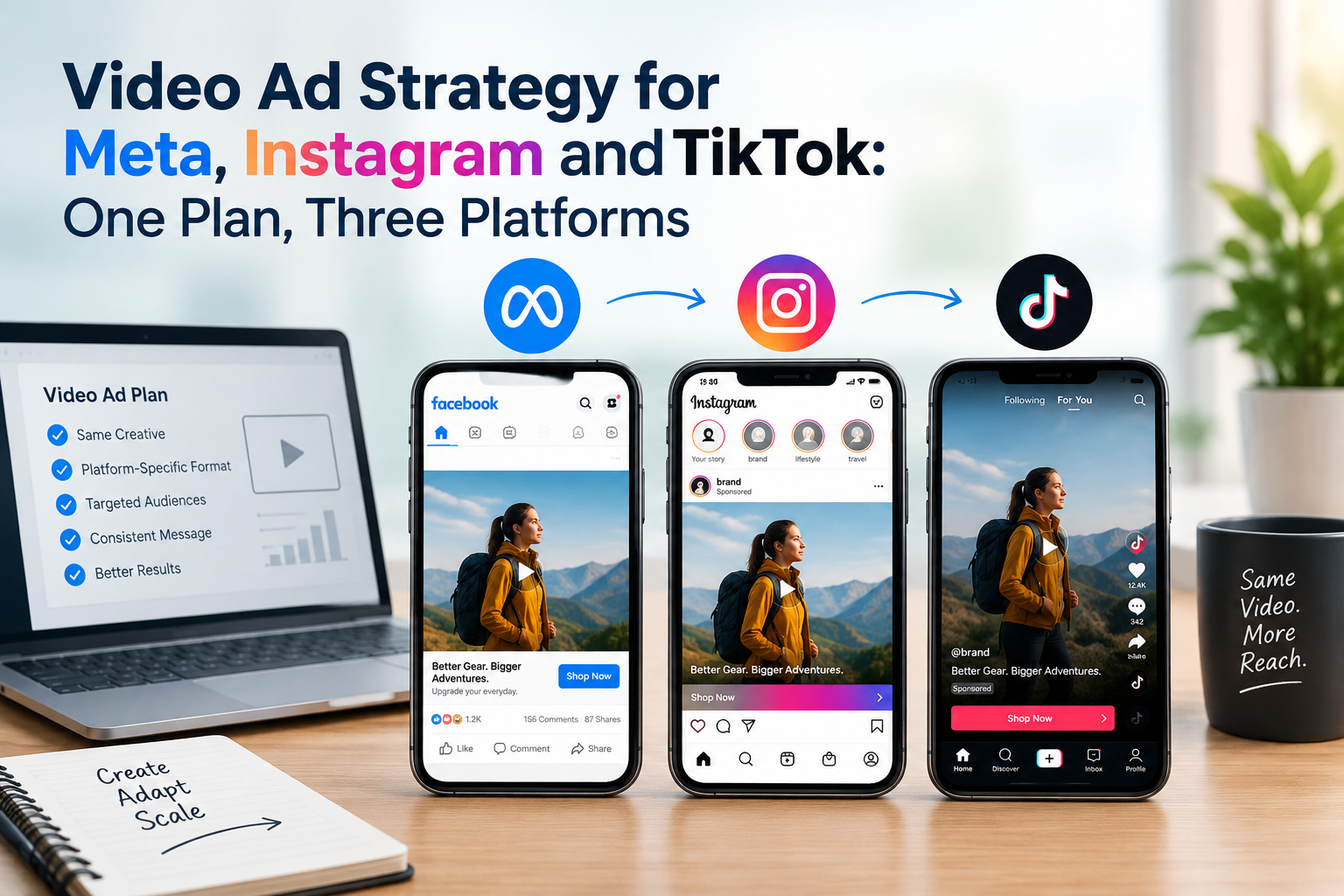
Many brands make a video, upload it everywhere and hope for the best. Sometimes it works. More often, the same video that does well on one platform fails on another, and nobody knows why.
A real video ad strategy solves this. It gives every video a clear purpose, a defined audience and a testing plan, and it adapts the message to each platform instead of copying it. In this guide, I'll explain how I plan video ads across Meta, Instagram and TikTok.
Start With the Goal, Not the Camera
Before anyone writes a script, decide what the video needs to achieve. A video meant to introduce your brand to cold audiences is very different from one meant to bring back people who visited your product page.
Match the Video to the Funnel Stage
• Cold audience: lead with a problem or a curiosity hook and keep the product secondary.
• Warm audience: show how the product works, add proof and answer common objections.
• Retargeting: keep it short, remind them of the benefit and make the offer clear.
When the goal is clear, every creative decision gets easier, from the length of the video to the call to action.
Plan the Message Before the Format
Find the Angle First
An angle is the reason someone should care. It might be saving time, saving money, solving an annoying problem or proving that other people trust the product. Pick one angle per video. A video that tries to say everything usually says nothing memorable.
Use Customer Language
Read your reviews, comments and support messages. The words customers use to describe their problems are almost always stronger than anything written in a brainstorming meeting. Turn those phrases into hooks and lines in your script.
Build Platform-Specific Versions
Each platform has its own viewing habits. The same core message should be shaped differently for each one.
Meta and Facebook
Facebook audiences often tolerate slightly longer stories and clear explanations, especially when the offer needs context. If you are working with a Facebook ads expert, ask how video length and structure are matched to each audience stage, because a longer video can work well for warm audiences and poorly for cold ones.
Instagram favors fast, visual and mobile-first content. Vertical framing, clear captions and an immediate hook matter more here. A good Instagram ads approach plans Stories and Reels versions from the start instead of cropping a feed video afterward.
TikTok
TikTok rewards content that feels native, casual and creator-led. Polished, brand-style videos often get skipped. Strong TikTok ads usually look like organic posts, use real voices and get to the point in the first couple of seconds.
The Structure of a Strong Video Ad
Most high-performing video ads follow a simple flow, no matter the platform:
1. Hook: stop the scroll in the first three seconds with a problem, a result or a question.
2. Problem: show that you understand the frustration your buyer feels.
3. Solution: introduce the product in use and show a believable result.
4. Proof: add a review, a demonstration or a specific detail.
5. Call to action: tell the viewer exactly what to do next.
Plan every video with sound off in mind. Add captions, clear visuals and on-screen text so the message works even when people watch silently.
Test Your Videos Properly
Change One Thing at a Time
If you change the hook, the length, the voice and the offer all at once, you will not know what made the difference. Keep the body of the video the same and test several hooks first. Once you find a winner, test the angle, then the format.
Read the Metrics as a Chain
• Hook rate: do people stop to watch?
• Hold rate: do they keep watching past the opening?
• Click-through rate: does the message make them want more?
• Cost per result: does the whole journey pay off?
A low hook rate means fix the opening. Good watch time with weak clicks points to the message or offer. Clicks without sales usually point to the landing page or the funnel.
Common Video Ad Mistakes
• Reusing one video everywhere: each platform needs its own pacing, framing and tone.
• Overproducing: a simple, honest video often beats an expensive one.
• Ignoring the first three seconds: most viewers decide whether to stay almost immediately.
• Not documenting results: without notes, every new batch starts from zero.
Why Strategy Beats Production
Better cameras and editing help, but they do not fix a weak message. This is why a creative strategist focuses on research, angles and testing before production begins. When the strategy is right, even a simple phone video can perform well. When it is wrong, a perfect edit still will not save it.
If you want to see how this thinking turns into measurable results, you can review real campaign case studies and the outcomes behind them.
Frequently Asked Questions
What is a video ad strategy?
A video ad strategy is a plan that defines the goal, audience, message, platform and testing method for your video ads before production begins. It makes sure every video has a clear purpose instead of being made and posted without direction.
How long should a video ad be?
There is no fixed rule. Many advertisers start with short videos for cold audiences and use longer ones for warm audiences who need more explanation. Test different lengths and let your hold rate and cost per result guide the decision.
Can I use the same video on Meta, Instagram and TikTok?
You can, but it usually performs better when adapted. Keep the core message the same and change the pacing, framing, captions and tone to match how people watch on each platform.
How many hooks should I test for each video?
Three to five hooks per video concept is a practical starting point. Keep the rest of the video the same so you can see clearly which opening earns the most attention.
How do I know if my video ad is working?
Look at the full chain of metrics: hook rate, hold rate, click-through rate and cost per result. One number alone can be misleading, so read them together to see where viewers drop off.
Final Thoughts
A good video ad strategy is not about making more videos. It is about making the right videos for the right audience on the right platform, and learning from every result. Start with a clear goal, choose one angle, adapt the message for each platform and test one change at a time.
Do this consistently and video stops feeling like a gamble. You will know what to make next, why it should work and how to scale it when it does.
Ready to Implement This in Your Ad Account?
Stop guessing why your Meta ads are stalling. Let's look inside your Ads Manager together and find the high-leverage growth bottlenecks.
Book 15-Minute Strategy Call →