Meta Ads Scaling
What Makes an Ad Hook Earn Attention Without Misleading the Customer?
By Zohaib Raja
•
September 17, 2026
•
6min read
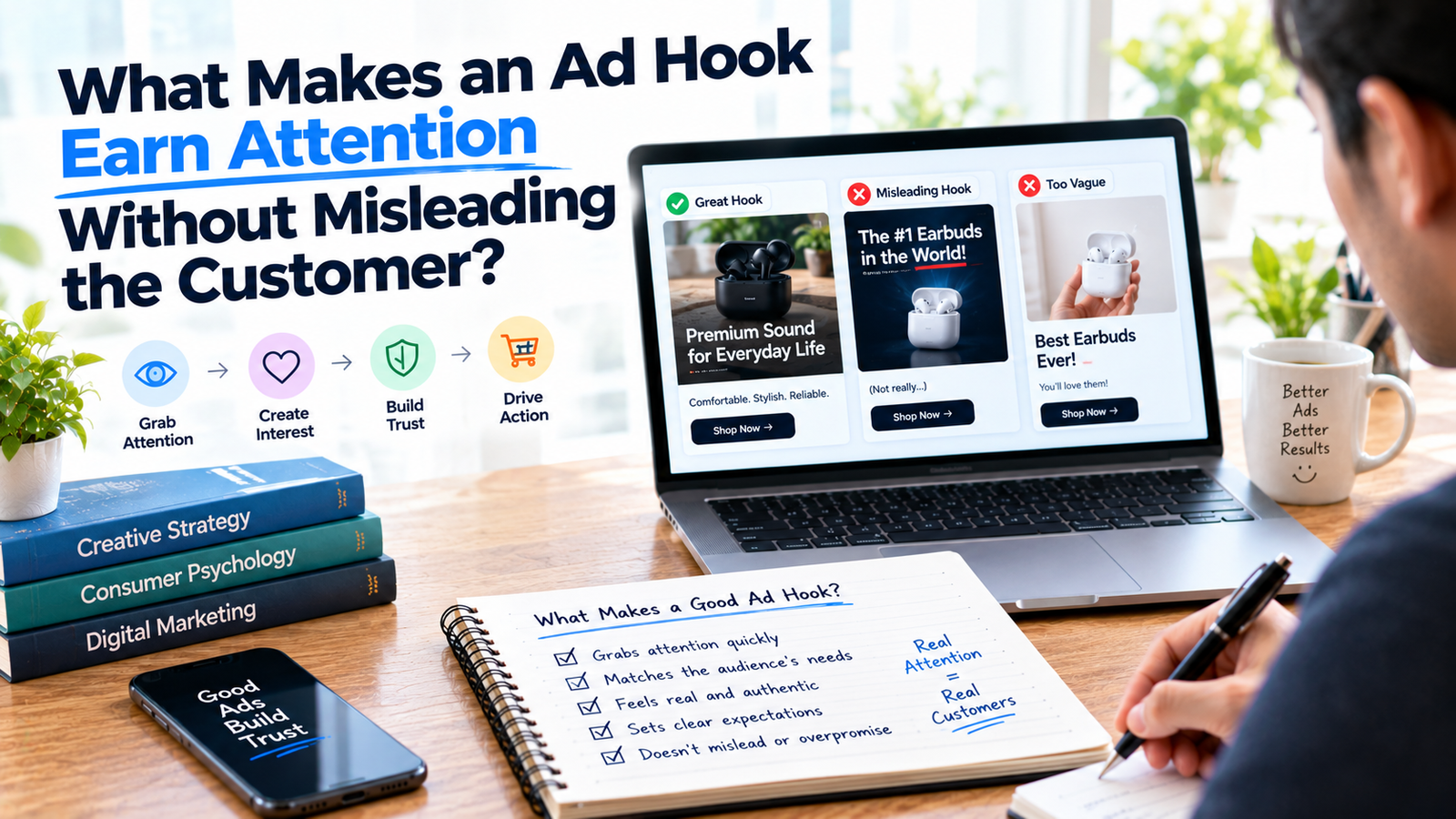
People scroll past dozens of ads without noticing most of them. The opening line or first moment of a video has a difficult job: give the right person a reason to pause.
That opening is the ad hook. A strong hook makes a relevant problem, question, or benefit clear quickly. It does not need to shock everyone who sees it. It needs to attract people who may actually care about the offer.
What Is an Ad Hook?
An ad hook is the first element that draws attention to an advertisement. In a video, it might be the first sentence, visual, or action. In a static ad, it could be the headline or the image itself.
A hook makes a small promise about what the viewer will learn or see next. “Watch how this bag fits a laptop and a weekend’s clothes” sets a clear expectation. The rest of the ad should deliver on it.
The hook is only the start. If viewers pause but the message becomes confusing, attention will not necessarily turn into an enquiry or sale.
Start With a Real Customer Question
The quickest way to find hook ideas is to listen to customers. What do they ask before purchasing? What frustrates them about current options? Which feature do they struggle to understand?
Suppose a brand sells a compact desk. Customers keep asking whether it feels sturdy in a small apartment. “A desk that fits anywhere” sounds broad. A video opening that shows someone working at the desk in a tight room answers a more specific concern.
Reviews, support conversations, comments, and sales calls can all reveal these questions. A creative strategist can turn repeated concerns into hooks that speak to the customer’s actual decision.
Write the questions in the customer’s words before trying to make them sound clever. Clear language is easier to recognise while scrolling.
Match the Hook to the Stage of Awareness
Not everyone who sees an ad knows they have the same problem. A new audience may respond to a familiar situation: “Still copying every customer enquiry into a spreadsheet?”
Someone who already knows the product category may need a different opening, such as a demonstration of setup or a comparison of two options. A previous visitor may want an answer about price, delivery, or what is included.
The offer remains the same, but each hook serves a different question. This gives campaigns more variety and prevents the team from showing every viewer the same introduction.
Use the Visual as Part of the Opening
On a crowded feed, viewers may notice movement, a product, or a recognisable situation before they read a headline. The visual should help them understand the idea.
If the hook promises a product demonstration, show the product in use immediately. If it raises a question about size, put the product next to an object that provides useful scale. Avoid an unrelated image chosen only because it looks dramatic.
The static and video examples on this site show different formats. When reviewing creative, ask what a viewer would understand from the opening alone.
Make a Promise You Can Keep
A dramatic claim may stop someone for a moment, but it can damage trust if the ad cannot support it. “This one trick guarantees sales” creates an expectation that an ordinary service or product cannot reasonably meet.
A useful hook can still be interesting without exaggeration. Show a real obstacle, a visible result, or a question people genuinely ask. Then use the rest of the ad to provide context.
Accuracy matters after the click too. If the hook mentions a specific offer, the landing page should explain that offer clearly. A visitor should not have to hunt for what the ad promised.
This connection between ad, offer, and page is part of the creative strategy and advertising services described here.
Test Different Ideas, Not Just Different Wording
Changing “Save time today” to “Start saving time now” gives you a second line, but little new information about your audience.
A stronger test compares different customer motivations. One hook might focus on the effort involved in a task. Another could address uncertainty about the result. A third might demonstrate a feature customers often overlook.
A hook that earns attention from people who will never need the product may be less useful than a quieter one that brings suitable customers.
Record the idea behind each test. Over time, you can identify which customer concerns deserve more creative work.
Study Results in Context
A high view count can feel encouraging, but it does not tell the whole story. The opening may be entertaining while the offer is unclear. Equally, a direct hook may attract fewer viewers yet bring more qualified enquiries.
Compare the hook with the full campaign outcome. Look at the following message, the destination page, and the quality of actions people take. If the right viewers click but do not convert, the problem may lie later in the journey.
The case studies provide examples of campaigns where creative and performance are considered together. Reviews and client feedback can also add context to the numbers, which is why the results and reviews page is worth reading alongside them.
Frequently Asked Questions
How long should a video ad hook be?
It should make the main idea understandable quickly. The exact length depends on the format and complexity of the offer; clarity matters more than meeting a fixed number of seconds.
Can the same hook work in a static ad and a video?
Yes. The underlying idea can be adapted to both. A static ad may use a headline and image, while a video can show the situation unfolding.
Should every hook mention the product immediately?
No. A customer problem or question can be a useful opening, provided the ad connects it to the product promptly and clearly.
Final Thoughts
Good hooks begin with a useful observation about the customer. They draw attention by making a relevant question or benefit easy to recognise, then give the rest of the ad a clear direction.
Test different ideas, check what people do after clicking, and keep every opening honest. If you want to discuss how hooks fit your broader campaigns, you can contact Zohaib Raja.
Ready to Implement This in Your Ad Account?
Stop guessing why your Meta ads are stalling. Let's look inside your Ads Manager together and find the high-leverage growth bottlenecks.
Book 15-Minute Strategy Call →