News
Why Do Paid Leads Book Appointments but Fail to Attend and How Can Businesses Reduce No-Shows?
Generating appointments through paid advertising can feel like a major achievement. The campaign is producing leads, prospects are selecting available time slots, and the sales calendar appears full. However, the real problem becomes visible when many of those prospects fail to attend their scheduled calls.
A high appointment booking rate means little if the attendance rate remains low. Missed appointments waste advertising budget, reduce sales productivity, and make an otherwise promising campaign appear unprofitable.
Effective appointment no-show reduction for paid leads requires more than sending a basic reminder. Businesses must examine the complete journey from the advertisement and landing page to the booking confirmation and sales call.
Why Paid Leads Miss Scheduled Appointments
People miss appointments for many reasons, and not every no-show represents a poor-quality lead. Some prospects forget, while others lose interest because the business fails to maintain momentum after the booking.
The most common causes include:
· A long delay between booking and the appointment
· Weak or unclear confirmation messages
· No reminder sequence
· A confusing calendar invitation
· Lack of perceived value in the scheduled call
· Inconsistent messaging between the advertisement and booking page
· Too many questions or steps before the meeting
· No simple option to reschedule
A strong performance marketing strategy should measure attended appointments rather than treating every form submission or calendar booking as an equal success.
Set the Right Expectation in the Advertisement
No-show prevention begins before someone reaches the landing page. The advertisement should explain what the prospect is booking and what they can expect from the conversation.
Generic calls to action such as “Book Now” may generate more appointments, but they can also attract people with weak intent. A more specific call to action establishes a clear commitment.
For example, an advertisement could invite the prospect to book a 20-minute strategy call to review a particular problem. This is more meaningful than offering a vague consultation without explaining its purpose.
The message should also match the actual meeting. If an advertisement promises a useful assessment but the call immediately becomes an aggressive sales pitch, future campaign performance and brand trust may suffer.
An experienced digital marketing strategist considers the quality of the post-booking experience while developing the campaign message.
Reduce the Delay Between Booking and the Call
Interest is usually strongest when a prospect first submits a form or schedules an appointment. The longer the delay before the meeting, the greater the possibility that attention will move elsewhere.
Whenever possible, offer appointment times within the next 24 to 72 hours. Avoid presenting availability that begins a week or two later unless the service naturally requires advance scheduling.
Businesses can also provide an immediate-call option for high-intent prospects. A lead who wants help today may not remain equally interested five days later.
Campaigns should be reviewed alongside sales availability. If the sales team cannot offer timely appointments, increasing advertising spend may create more bookings without producing more attended calls.
Create a Clear Confirmation Experience
A confirmation page should do more than display a brief “thank you” message. It should confirm the date, time, time zone, meeting format, and expected duration.
The page should also tell the prospect what will happen during the call. A short agenda may include:
1. Reviewing the prospect’s current situation
2. Identifying the main challenge
3. Discussing possible next steps
4. Answering relevant questions
This information increases the perceived value of attending. It also reduces uncertainty for prospects who may be unfamiliar with consultation calls.
The confirmation page should provide calendar options for commonly used platforms. Businesses reviewing their paid advertising services should ensure that the post-conversion experience receives as much attention as the ad and landing page.
Use a Multi-Step Reminder Sequence
A single automated email is rarely enough. People receive dozens of messages every day, and a calendar notification can easily be overlooked.
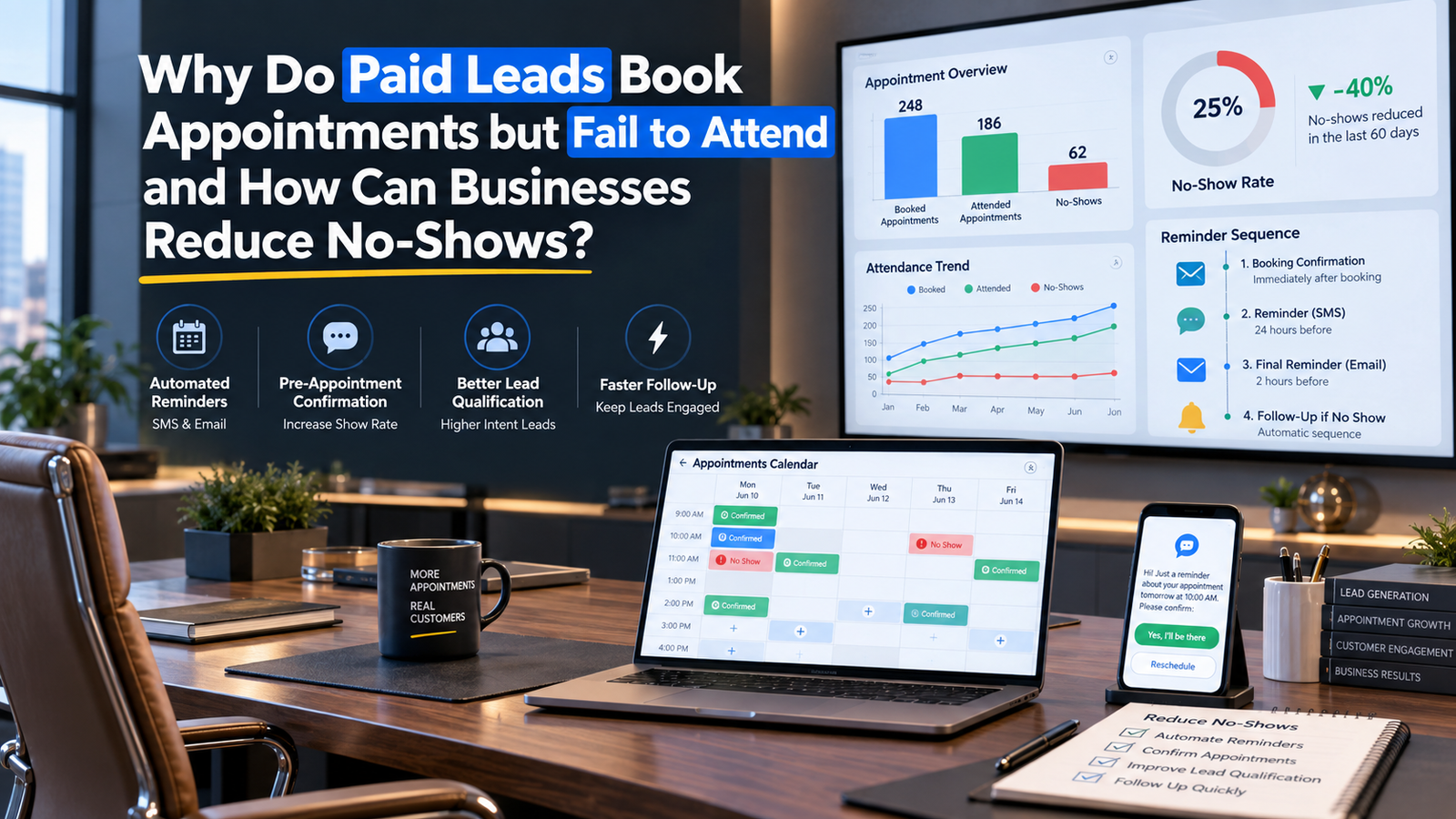
A useful reminder sequence may include:
· An immediate email and SMS confirmation
· A reminder 24 hours before the appointment
· A shorter reminder two or three hours before the call
· A final notification 10 to 15 minutes before the meeting
Each reminder should contain the appointment time, meeting link, and rescheduling option. Keep the message clear and helpful instead of filling it with unnecessary promotional content.
Adding the prospect’s name and the specific reason for the meeting can make the reminder feel relevant. However, excessive messaging may become irritating, so businesses should monitor replies, cancellations, and attendance rates to find the right frequency.
Give Prospects a Reason to Attend
A prospect is more likely to attend when the expected value of the meeting is clear. Confirmation messages can briefly explain what the person will learn, receive, or accomplish during the conversation.
For example, the call might include a campaign assessment, a review of the prospect’s current lead-generation process, or recommendations based on their goals.
Avoid promising unrealistic results. Credibility is more valuable than exaggerated claims. Relevant marketing portfolio examples can help demonstrate experience without turning every reminder into a sales message.
A short pre-call resource may also strengthen commitment. This could be a checklist, a brief video, or a relevant case study that prepares the prospect for a more productive discussion.
Make Rescheduling Easy
Some prospects genuinely want to attend but face unexpected conflicts. If rescheduling is difficult, they may simply disappear.
Every reminder should contain a clear rescheduling link. The process should take only a few clicks and should not require the prospect to complete the entire lead form again.
Businesses should distinguish between cancellations, rescheduled appointments, and unexplained no-shows. Each outcome provides different information about campaign quality and operational performance.
Someone who reschedules may still be a valuable opportunity. Treating that person as a lost lead could waste the advertising investment already made.
Align Marketing and Sales Communication
The sales representative should understand what the advertisement promised, which service interested the lead, and what information the prospect submitted.
When marketing and sales use different messages, the prospect may feel that the meeting is unrelated to the original advertisement. This disconnect can reduce trust and increase early call abandonment.
Lead details should pass accurately into the CRM or appointment system. The sales team should know the campaign source, advertised offer, stated problem, and any qualifying responses.
Reviewing actual campaign case studies can help teams understand how consistent messaging supports the complete customer journey.
Measure Attendance Quality, Not Just Booking Volume
Campaign reporting should separate booked appointments from attended appointments. Businesses should also track:
· Booking-to-attendance rate
· Cost per attended appointment
· Rescheduling rate
· Cancellation rate
· Qualified appointment rate
· Sales generated from attended calls
These figures provide a more realistic view of advertising performance. A campaign producing expensive bookings may still be valuable if those appointments attend and convert. A campaign generating cheap bookings may be unprofitable when most prospects never appear.
Different audiences, advertisements, offers, and landing pages should be compared using attended and qualified appointments as primary outcomes. Verified client results and reviews may strengthen trust, but accurate tracking is still necessary to determine which campaigns generate real business opportunities.
Improve Lead Quality Without Creating Excessive Friction
Adding one or two qualifying questions can reduce low-intent bookings. Useful questions may cover the prospect’s objective, current challenge, estimated budget, or desired timeline.
However, an excessively long application form can reduce conversion volume and discourage suitable prospects. The goal is to collect enough information to establish relevance without turning the booking process into an interrogation.
Test form length carefully. Compare attendance quality, not only completion rate. A shorter form may generate more appointments, while a slightly longer form may produce fewer but more serious prospects.
Final Thoughts
Appointment no-show reduction for paid leads depends on the complete experience surrounding the booking. Businesses must set clear expectations, offer timely availability, send useful reminders, communicate the value of attending, and make rescheduling simple.
The advertisement is only the beginning. The confirmation page, calendar invitation, reminder sequence, CRM data, and sales approach all influence whether a prospect attends.
When these elements work together, businesses can generate more completed conversations without necessarily increasing advertising spend. Improving attendance allows the company to recover more value from the leads it already produces.
Frequently Asked Questions
What is a good appointment attendance rate for paid leads?
The ideal rate depends on the industry, offer, price, and booking process. Businesses should establish their current baseline and improve it through reminder, scheduling, and qualification tests.
How many appointment reminders should a business send?
A practical sequence usually includes immediate confirmation, a 24-hour reminder, and a same-day reminder. High-value calls may benefit from an additional notification shortly before the meeting.
Do SMS reminders reduce appointment no-shows?
SMS reminders can improve attendance because they are often noticed faster than emails. Businesses should obtain appropriate consent and keep each message concise and relevant.
Should prospects be required to complete a questionnaire before booking?
A short questionnaire can improve qualification and help the sales team prepare. However, too many required questions may reduce legitimate bookings, so the form should include only necessary information.
What should a business do after someone misses an appointment?
Send a polite follow-up with a simple rescheduling link. Avoid making the prospect feel guilty. If there is no response, use a short follow-up sequence before returning the contact to a longer-term nurturing campaign.
Ready to Implement This in Your Ad Account?
Stop guessing why your Meta ads are stalling. Let's look inside your Ads Manager together and find the high-leverage growth bottlenecks.
Book 15-Minute Strategy Call →