Why UGC Ads Lose Viewers After the Hook—and How to Fix the Script
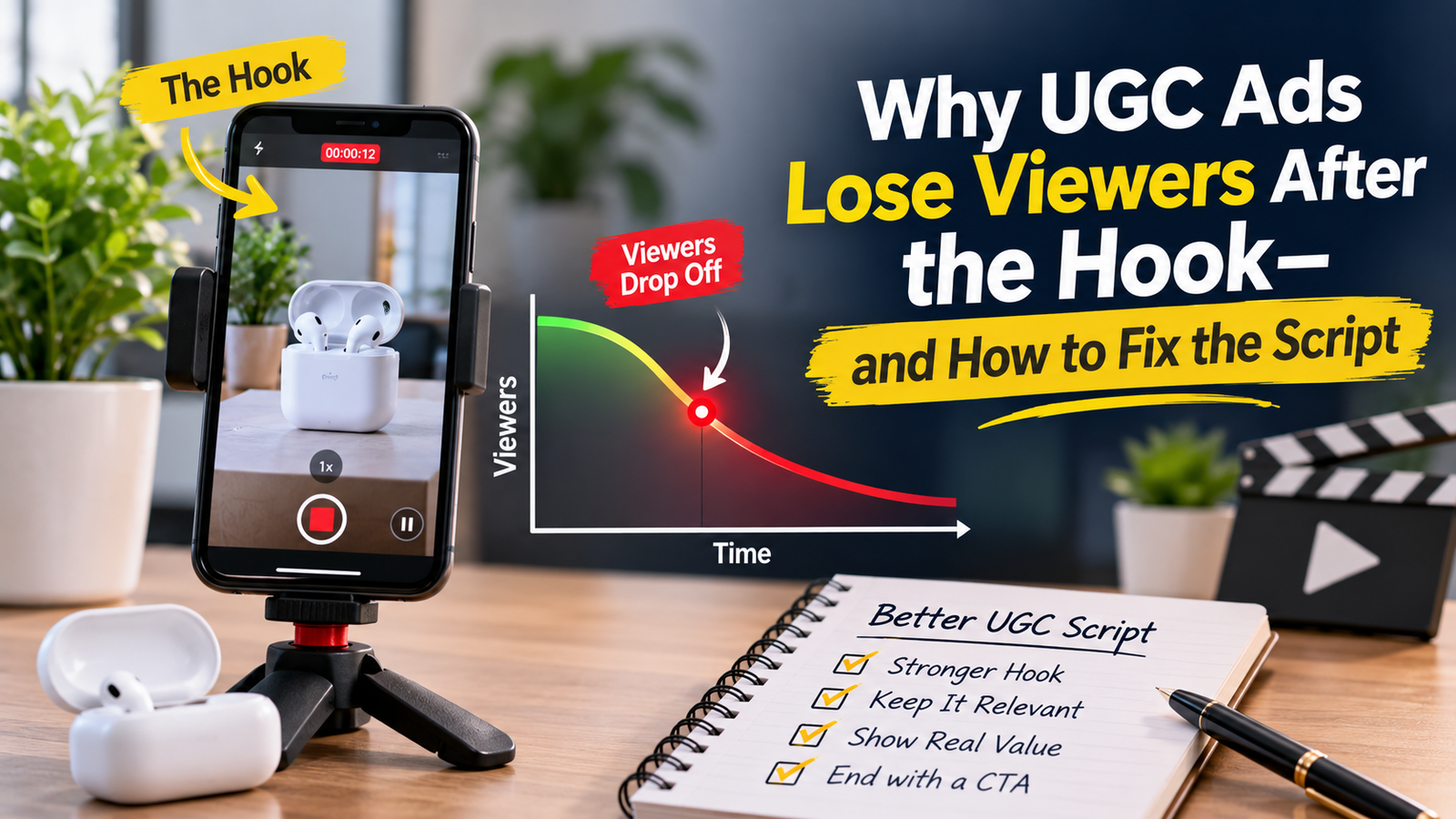
A creator can win the first second and still lose the sale when the rest of the script fails to explain the product. The middle of a UGC advertisement has to earn the attention the opening creates. It should make the benefit credible, show relevant evidence, and help viewers understand what to do next. This guide focuses on repairing that neglected middle without turning a personal-style video into a stiff commercial.
The objective is not to produce more advertising material for its own sake. It is to make each message useful to a person considering a purchase, while giving the advertising team a clear reason to test it. Good decisions begin with customer evidence and continue through the creative, landing page, and eventual business result. That connection is what makes ugc scriptwriting useful beyond the first impression.
Make the first promise worth keeping
A strong opening creates an expectation that the rest of the video must satisfy. A curiosity-driven introduction without a clear payoff turns attention into disappointment. Do not confuse a longer watch time with actual persuasion; a viewer should understand the point without reaching the final frame.
A skincare creator asks why a morning routine feels complicated, then spends twenty seconds introducing the brand rather than showing the routine. Write the promised answer in one sentence before drafting the middle. Put the essential demonstration directly after the hook. This is where UGC Scriptwriting helps turn a broad creative preference into a decision that can be checked against actual audience behavior.
Replace the feature list with a specific moment
Creators often follow a good hook with a list of product features. That shift feels like a catalogue and removes the human context that made the opening interesting. If a benefit cannot be shown, support it with an accurate explanation rather than inventing a customer result.
Instead of listing a lunch container’s compartments, show how a rushed commuter packs lunch without separate bags. Choose one believable use case and film the product performing that task. Explain only the features needed to make the moment understandable.
Put objections where doubt appears
Viewer skepticism usually rises when a creator makes a product claim. Waiting until the closing seconds to answer the obvious question can lose interested buyers. Avoid using edited footage to imply a faster, easier, or more dramatic result than the product reliably delivers.
A foldable desk advertisement promises easy setup, but viewers need to see how it locks in place before believing the convenience claim. Identify the most likely objection and answer it with a close-up, comparison, or clear qualification at the moment it matters. This is where Creative Strategist helps turn a broad creative preference into a decision that can be checked against actual audience behavior.
Write for spoken language
An ad script can read well on paper and still sound unnatural when spoken. Long sentences and repeated marketing adjectives make creator delivery stiff. Natural delivery does not require pretending that a paid advertisement is an independent recommendation.
A scripted line about revolutionary ergonomic optimization can become a plain explanation of how a chair feels after a full working day. Read the script aloud and remove anything a real speaker would not say. Leave space for an unscripted but truthful observation.
Use visual changes to clarify the story
Visual pacing matters when each shot advances understanding. Rapid cuts without meaning can make the product harder to follow instead of more exciting. Do not build the entire concept around a transition that distracts from the reason to buy.
A cleaning product video could show the messy surface, the application, and the final view in a logical sequence. Storyboard the explanation before adding movement, captions, or sound effects. Each cut should answer a question or show a relevant detail. This is where Hook Development helps turn a broad creative preference into a decision that can be checked against actual audience behavior.
Match the CTA to the story
A sudden hard-sell ending can feel disconnected from a useful demonstration. The next step should follow naturally from what the viewer has learned. A strong CTA does not compensate for an unconvincing demonstration or a confusing offer.
After showing a storage solution inside a small apartment, the creator can invite viewers to check sizes and installation details. Make the call to action specific to the decision the viewer now faces. Offer a product page, comparison, or consultation when appropriate.
Review drop-off alongside conversion
Video retention reveals where attention declines, but it cannot establish whether the message sells. Campaign outcomes and landing-page behavior complete the picture. Avoid making a creative decision from a tiny sample or from engagement metrics alone.
Two openings may reach similar watch times while only one attracts people who understand the product and purchase. Compare hook retention with clicks, conversion quality, and customer acquisition cost where data is reliable. This is where Creative Testing helps turn a broad creative preference into a decision that can be checked against actual audience behavior.
Build the next script from one finding
A failed video is useful when the team can identify a specific weakness. Replacing every part of an ad at once makes the result difficult to interpret. A repeatable learning process is more valuable than constantly searching for an unrelated viral format.
If people watch the opening but leave before the demonstration, the next version can bring the demonstration earlier. Document the hypothesis, change one meaningful element, and evaluate the new version against the same objective. This is where Static Ad Strategy helps turn a broad creative preference into a decision that can be checked against actual audience behavior.
Frequently Asked Questions
What is the first step in ugc scriptwriting?
Start with one customer question and a clear outcome. Review the evidence available, then develop a specific idea you can explain and evaluate.
How many creative ideas should a brand test?
Start with a manageable number of genuinely different concepts. The suitable number depends on campaign volume, budget, and how much data each decision requires.
Should a business prioritize clicks or conversions?
Use metrics that match the campaign objective. Clicks help reveal interest, but lead quality, purchases, and acquisition economics show whether the response is commercially useful.
Can one customer insight support several ad formats?
Yes. A valid insight can support image, video, and creator-led ads when each execution communicates the same truthful benefit in a suitable way.
When should an underperforming creative be changed?
Investigate the offer, audience, landing page, tracking, and message first. Change the element with the strongest evidence of causing the problem instead of following a fixed calendar.
Final Verdict
Better ugc scriptwriting begins with a useful question and ends with a better decision. The strongest teams connect a clear buyer need to truthful evidence, thoughtful execution, and a measurement plan. They resist cosmetic changes that create activity without learning and keep the original offer understandable throughout the customer journey.
Build a focused hypothesis, choose an execution that answers it, and review real business outcomes before expanding spend. If you want to connect creative decisions with paid media execution, review the relevant services and contact Zohaib Raja to discuss the specific challenge your campaigns need to solve.
Ready to Implement This in Your Ad Account?
Stop guessing why your Meta ads are stalling. Let's look inside your Ads Manager together and find the high-leverage growth bottlenecks.
Book 15-Minute Strategy Call →