Why Does Above the Fold Clarity Matter When Paid Traffic Reaches a Landing Page?
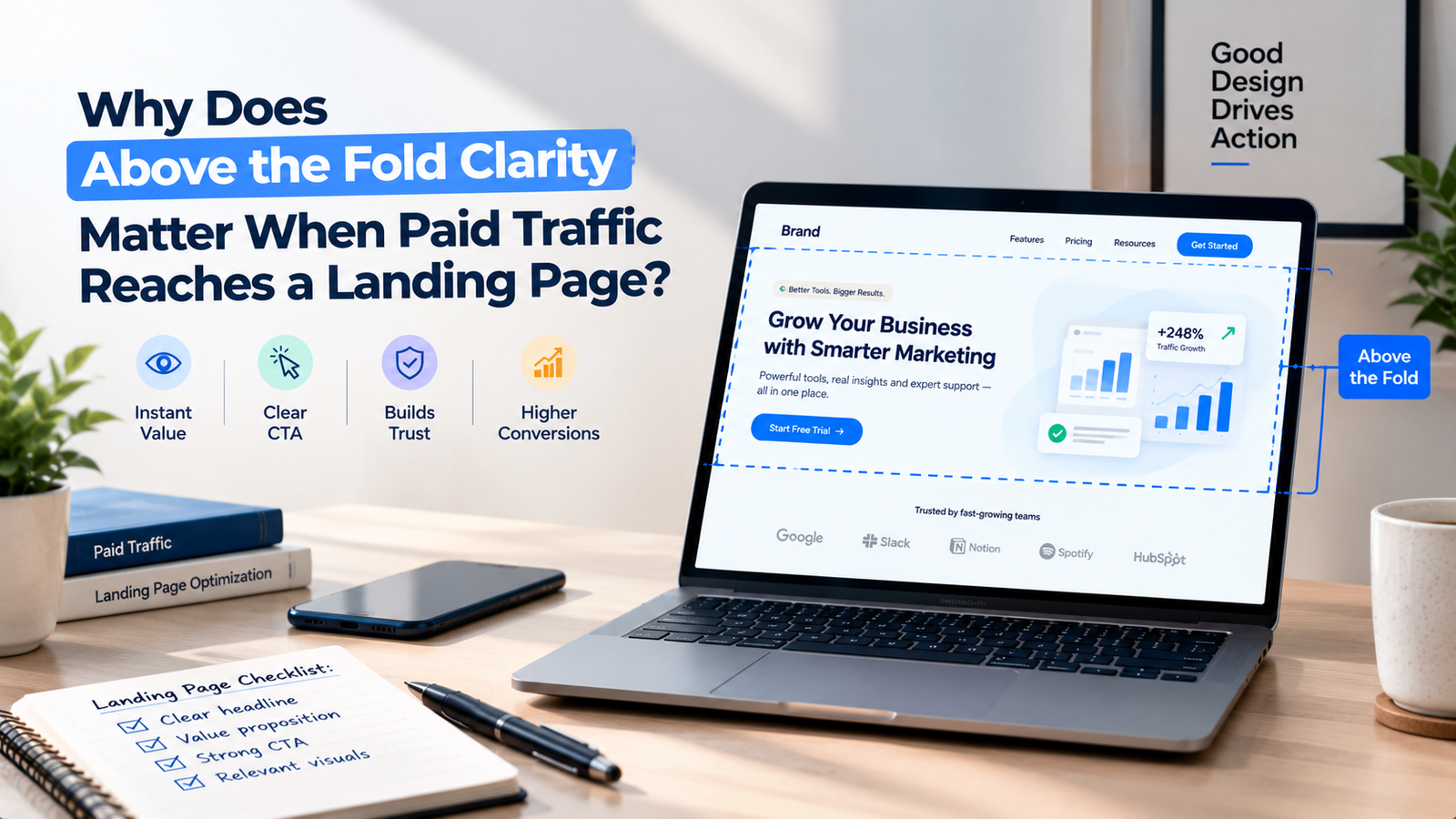
Paid advertising rarely improves because a team produces more assets without a clearer reason. It improves when the message reflects how customers think, what they need to believe, and what should happen after the click. Why Does Above the Fold Clarity Matter When Paid Traffic Reaches a Landing Page is therefore a practical growth question, not simply a creative preference.
Above-the-fold landing page clarity helps connect customer insight with campaign execution. The purpose is to create useful attention, guide the right people toward a decision, and learn from the response without forcing every result into a platform-only explanation.
Why This Issue Deserves Attention
The central problem is visitors needing to confirm the offer, relevance, and next step within seconds. When that happens, strong ad interest is lost because the page begins with vague branding or competing actions. A campaign may still generate views, clicks, or conversions, yet those surface numbers do not explain whether the business is attracting the right customers or creating sustainable value.
A skilled creative strategist looks beyond individual ads and connects creative choices with the offer, customer journey, measurement, and commercial outcome. That wider perspective makes it easier to diagnose the real constraint before increasing production or spend.
This approach also reflects the broader background described in Zohaib Raja's experience. Creative direction and media buying work best together because an advertisement cannot be judged responsibly without understanding what it promised and what happened next.
Where the Strategy Usually Breaks Down
Common causes include headlines that do not continue the ad promise, important proof placed too far down, and several calls to action receiving equal emphasis. These issues often overlap, which is why changing one headline or audience rarely fixes the whole problem. The team first needs to identify which assumption is weak.
Relevant paid advertising services should begin with diagnosis. The campaign objective, audience state, customer objection, available proof, landing-page experience, and success signal need to support the same decision rather than operate as separate tasks.
A Practical Framework for Improvement
For above-the-fold landing page clarity, the most useful process is simple enough to repeat. Start with evidence from customers and campaign history, write one clear hypothesis, and decide what would confirm or challenge it. Then build the smallest meaningful test around that question.
· Repeat the main customer outcome.
· Show who the offer is for.
· Support the claim with focused proof.
· Make one action visually clear.
· Check the experience on mobile.
Examples in a professional creative portfolio can help teams distinguish a genuine strategic change from a cosmetic variation. The lesson is not to copy an execution, but to see how one focused idea can be translated into a clear visual, script, hook, or landing-page experience.
Execution should preserve the hypothesis. If the hook, audience, offer, format, page, and conversion event all change at once, the result may move but the team will not know why. Controlled variation creates knowledge that can improve the next campaign instead of producing another isolated asset.
How to Test and Measure the Idea
Measurement should combine creative response with business value. Useful indicators for this topic include scroll depth, primary action rate, bounce rate, form completion, and conversion quality. The right reporting window depends on how long it takes a customer to buy, qualify, retain, or generate profit.
Well-documented campaign case studies are useful because they show why platform results need to be interpreted alongside the customer journey. A high response rate can be encouraging, but it is not sufficient if later conversion quality, margin, or retention becomes weaker.
Common Mistakes to Avoid
The first mistake is reacting to a short period of data without checking context. The second is declaring a universal winner when one execution worked for one audience or moment. The third is measuring attention without confirming whether the people who responded became valuable customers.
Independent client results and reviews can add context to performance claims, but past outcomes are not guarantees. A responsible strategy uses evidence to improve the quality of the next decision while acknowledging changes in markets, offers, competition, and platform delivery.
How to Build a Repeatable Process
A repeatable system needs ownership. Someone should maintain the research, record the hypothesis, brief the creative, check implementation, and document the conclusion. This does not require a complicated dashboard. A short learning log with dates, variables, outcomes, and next actions is often more useful than a large report nobody revisits.
Review the process on a schedule that matches campaign volume. High-spend accounts may need weekly creative decisions, while lower-volume campaigns need more time before conclusions are reliable. The goal is not speed by itself; it is faster learning without lowering the quality of judgment.
Final Thoughts
Why Does Above the Fold Clarity Matter When Paid Traffic Reaches a Landing Page matters because sustainable advertising is built from connected decisions. Customer research shapes the message, the message shapes response, the landing page supports the promise, and measurement reveals whether the complete journey produced value.
Used carefully, above-the-fold landing page clarity gives teams a clearer way to improve creative and media performance without relying on constant guesswork. The strongest next step is usually one focused test with a defined learning goal and a business outcome that can be verified.
Frequently Asked Questions
What is above-the-fold landing page clarity?
It is a structured approach to improving advertising decisions when visitors needing to confirm the offer, relevance, and next step within seconds. It connects customer understanding, creative execution, campaign data, and the outcome that matters to the business.
How should a business start using this approach?
Begin with one campaign where strong ad interest is lost because the page begins with vague branding or competing actions. Review the customer message, the journey after the click, and the evidence available before designing a focused test.
Which metric should be reviewed first?
Start with the metric closest to commercial value, then work backward. Useful starting points include form completion and conversion quality, supported by earlier response signals.
How long should a test run?
Run it long enough to capture a representative decision cycle and enough conversions to avoid reacting to daily noise. The required time depends on spend, volume, and how long downstream quality takes to appear.
Can one successful test be applied to every campaign?
Not automatically. Use the learning as a new hypothesis, then validate it across relevant audiences, offers, products, and markets before treating it as a general rule.
Ready to Implement This in Your Ad Account?
Stop guessing why your Meta ads are stalling. Let's look inside your Ads Manager together and find the high-leverage growth bottlenecks.
Book 15-Minute Strategy Call →