How to Advertise a New Product on Meta: A Before, During and After Plan for Small Brands
A new product launch feels like a single moment. You build it, set a date, switch on some ads and wait for orders. Then launch day arrives, the ads spend, and the results are underwhelming. The conclusion is usually that the product or the platform failed.
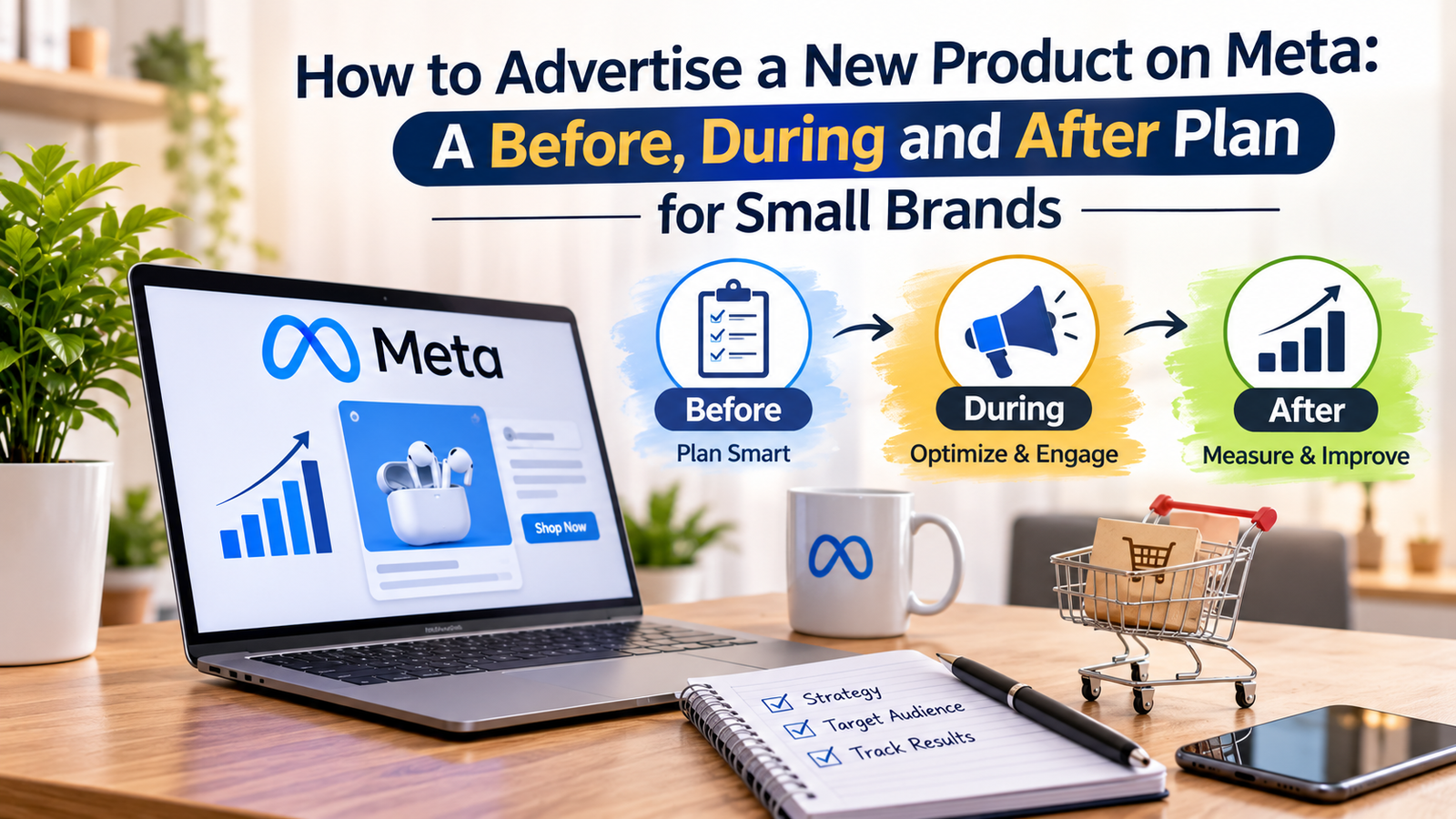
More often, the real problem is timing and structure. A new product has no history, no audience and no data, so ads switched on cold on launch day have very little to work with. Advertising a new product well means planning three phases: the weeks before launch, the launch window itself and the period afterwards. Here is how to approach each one.
Why New Products Struggle on Meta
Meta's delivery system learns from results. When a campaign has no conversions yet, it has little to learn from, so early delivery can be uneven and expensive. For an established product with months of sales history, this matters less. For a brand-new one, it is the central challenge.
The solution is not to spend more on day one. It is to create signals, audiences and creative before launch, so the system and your customers are not meeting the product at exactly the same moment.
Phase One: Before Launch Day
Start Building an Audience Early
The weeks before a launch are the cheapest time to gather attention. Share teasers, behind-the-scenes content and problem-focused posts related to what the product solves. People who watch your videos, visit your site or engage with your page can be grouped into audiences and reminded on launch day.
A simple coming-soon page or waitlist gives interested people somewhere to go and gives you something concrete to measure. Even a small group of warm people on day one is far more valuable than starting from nothing.
Plan Your Image Ads Carefully
Static images are ideal for early testing, because they are quick and inexpensive to produce. A thoughtful static ad strategy lets you test several angles for the product before launch, such as the problem it solves, the result it delivers and the people it is for. The angles that earn attention become the foundation for your launch creative.
Prepare Creator Content Early
If you plan to use creators, brief them well before launch. Videos take time to film, review and revise, and you want finished content ready on the day, not a week afterwards. Good UGC scriptwriting starts with a clear idea per video and leaves room for the creator's own voice, so the content feels like a genuine reaction to the product, not a rehearsed announcement.
Check Tracking Before You Spend
Make sure your pixel and conversion events record page views, add-to-carts and purchases correctly. A launch is the worst time to discover that tracking is broken, because you will be spending money with no reliable way to judge the results.
Phase Two: The Launch Window
Keep the Structure Simple
During launch, simplicity wins. A small number of campaigns with clear jobs is easier to manage and gives the system more data per campaign. Keep one setup for reaching new people and a separate one for retargeting the warm audiences you built beforehand.
Test a Few Different Angles
You will not know which message resonates with a brand-new product, so give yourself more than one chance to find out. Launch a few genuinely different angles, such as a problem-focused ad, a social-proof ad and a founder-story ad, instead of several versions of the same idea.
Let the Campaigns Breathe
The most common mistake in the first days is changing everything because early numbers look slow. Early results are unstable, and constant edits make it harder for delivery to settle. Make deliberate changes, record what you did and give each change time to show its effect.
Make the Launch Feel Like News
A launch is a moment, and your messaging can reflect that. Announcements, countdowns, limited introductory offers and behind-the-story content give people a reason to act now. Keep any urgency honest. Fake scarcity damages trust and can break advertising rules.
Phase Three: After Launch Day
Read the Results Properly
After the first week or two, you will have real data. Look at the whole chain, not just sales. How many people stopped to watch? How many clicked? How many added to cart? How many bought? Each step shows you where the weak point sits.
Keep What Worked, Cut What Did Not
Angles that earned attention and sales deserve more budget and new variations. Ads that clearly failed should be retired, with notes on what you learned. Do not be sentimental about launch creative. Its job was to teach you something.
Expect the Launch Audience to Run Out
Early buyers are often your warmest audience: followers, subscribers and people who knew the launch was coming. Once they are used up, growth depends on reaching colder audiences, which usually costs more and needs clearer messaging. Plan for this shift so it does not feel like failure.
Look After Your Buyers
New customers are a source of reviews, photos and stories. Collect them, with permission, and use them in future ads. Real customer content often outperforms anything produced before launch.
Common Launch Advertising Mistakes
The first mistake is starting too late, so there is no warm audience and no ready creative. The second is judging results on day one, when the system has barely begun to learn. The third is running a single idea and hoping it works. The fourth is overbuilding, with too many campaigns and audiences sharing a small budget.
Another quiet mistake is neglecting the page after the click. A great ad leading to a confusing product page wastes the attention you worked to earn.
A Simple Timeline to Adapt
In the weeks before launch, publish teasers, build audiences, test image angles and brief creators. In the first days, launch a small set of campaigns with a few distinct angles and leave them alone long enough to learn. Afterwards, review the whole funnel, keep winners, retire losers and prepare fresh creative for the colder audiences that follow.
Treat this as a framework, not a rule. Budget, product price and sales cycle will all shape how long each phase should last.
When to Bring in Extra Help
A launch has many moving parts, and mistakes are costly because you only get one first impression. If you are unsure how to structure campaigns, set up tracking or plan creative, a Meta ads specialist can map the phases to your budget and goals.
You can also read through real case studies to see how planning, creative and structure fit together in practice.
Frequently Asked Questions
How early should I start advertising a new product?
Many advertisers start building audiences and testing messages a few weeks before launch. The exact timing depends on your product and budget, but earlier is generally better than starting on launch day.
Should I run ads before the product is available?
Yes, in the form of teasers, waitlist or traffic campaigns that build audiences. Just make sure messaging is honest about availability.
How long should I wait before judging launch results?
Give campaigns enough time to move past early instability, which usually means days rather than hours. Judge the whole funnel, not only day-one sales.
Do I need creators for a product launch?
Not necessarily, but creator content can add trust and variety. If you use creators, brief them early so content is ready on launch day.
What if my launch ads do not work?
Check tracking, the product page and the message before blaming the product. Often a clearer angle or a simpler structure changes the picture.
Final Thoughts
A good product launch on Meta is rarely about a single burst of spending. It is about preparing before launch, keeping the structure simple during launch and learning honestly afterwards. Build audiences early, test a few distinct angles, give the system time and let real results guide what comes next.
If you would like help planning ads for your next product launch, you are welcome to get in touch and talk through the plan.
Ready to Implement This in Your Ad Account?
Stop guessing why your Meta ads are stalling. Let's look inside your Ads Manager together and find the high-leverage growth bottlenecks.
Book 15-Minute Strategy Call →